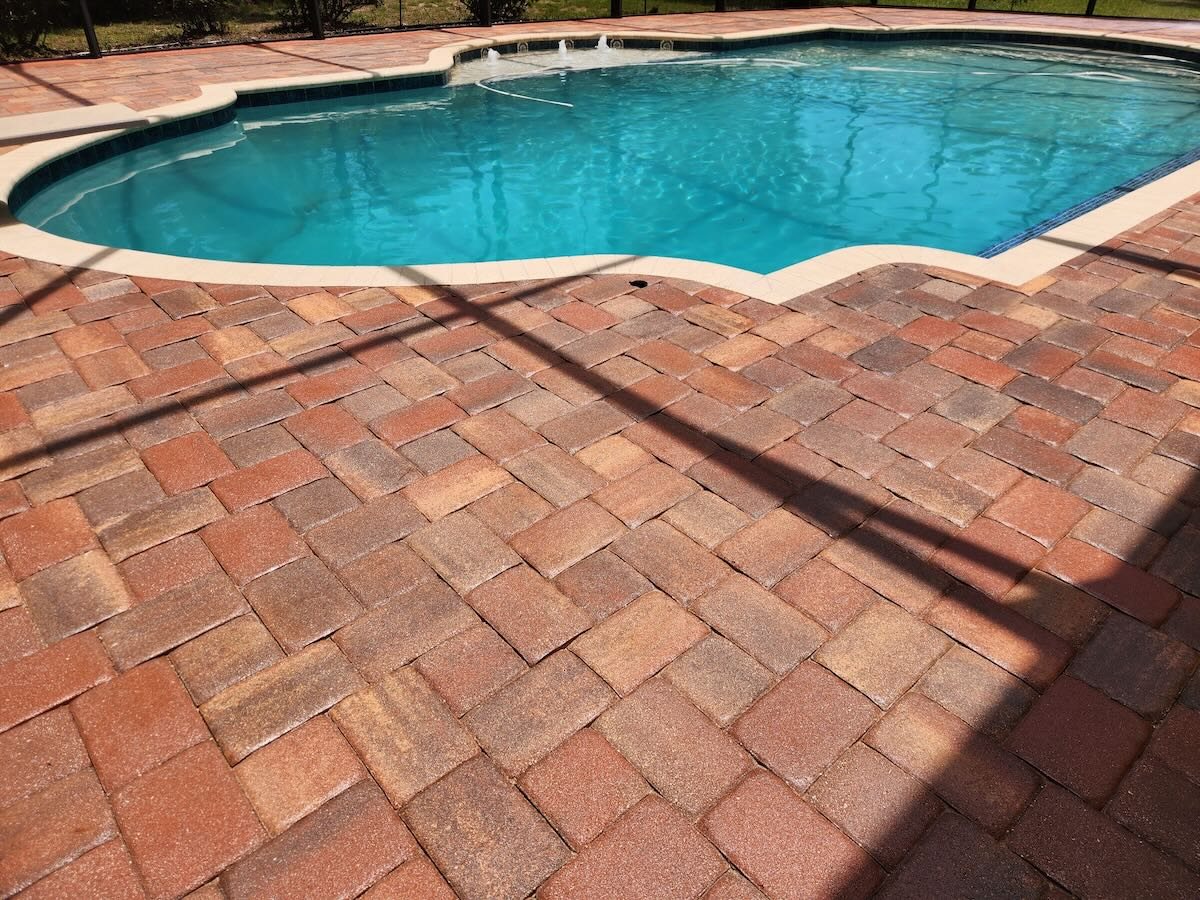
PAVER CLEANING & SEALING — CENTRAL FLORIDA
What actually happens to your Pavers
The full process, start to finish, and why each step is the one most companies skip.
15 YEARS SEALING PAVERS IN CENTRAL FLORIDA.
One of the few companies in the entire state that specializes in just paver and natural stone sealing.
Locally owned, based in Deltona. Licensed and insured. We work on hardscape only, in 3 counties.
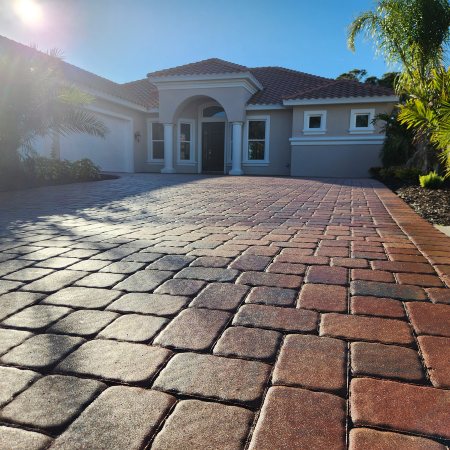
Florida is hard on pavers
Most people call us about algae, mold, mildew and weeds. We start somewhere else.
Algae, mold and weeds come after that. Nothing keeps weeds out permanently — most clients go a few months, and some have gone two and a half years.
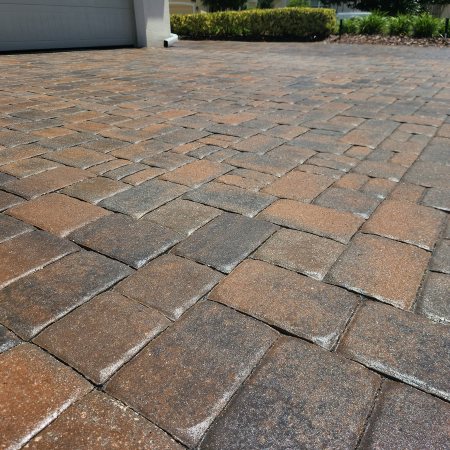
A bad seal job is worse than no seal job
Skipped prep and solvent-based sealer trap moisture under the surface. That is what turns pavers white, cloudy and peeling.
This is why we have spent the last 15 years developing the four-step process we call the "Castle Shield."
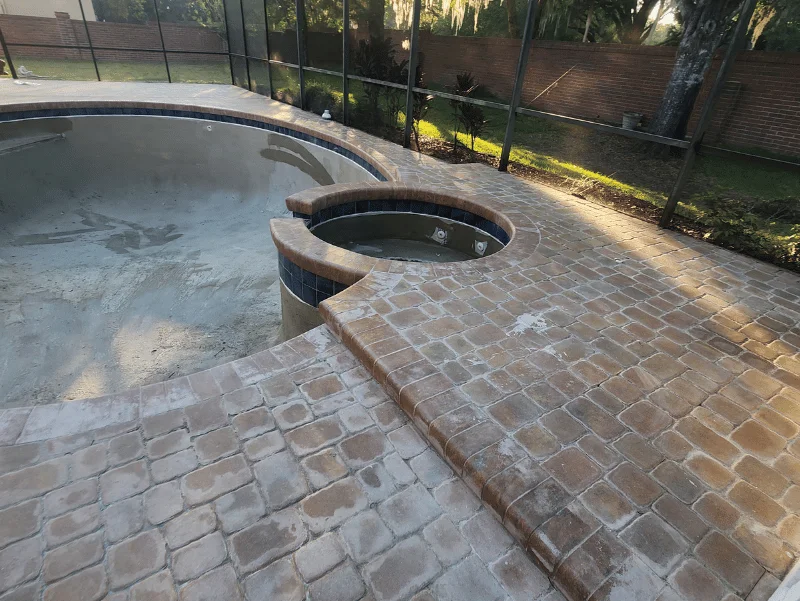
Almost everything that goes wrong with sealed pavers in Florida goes wrong before the sealer is ever opened.
Step 01 — Kill the growth
We treat what's alive before we touch it
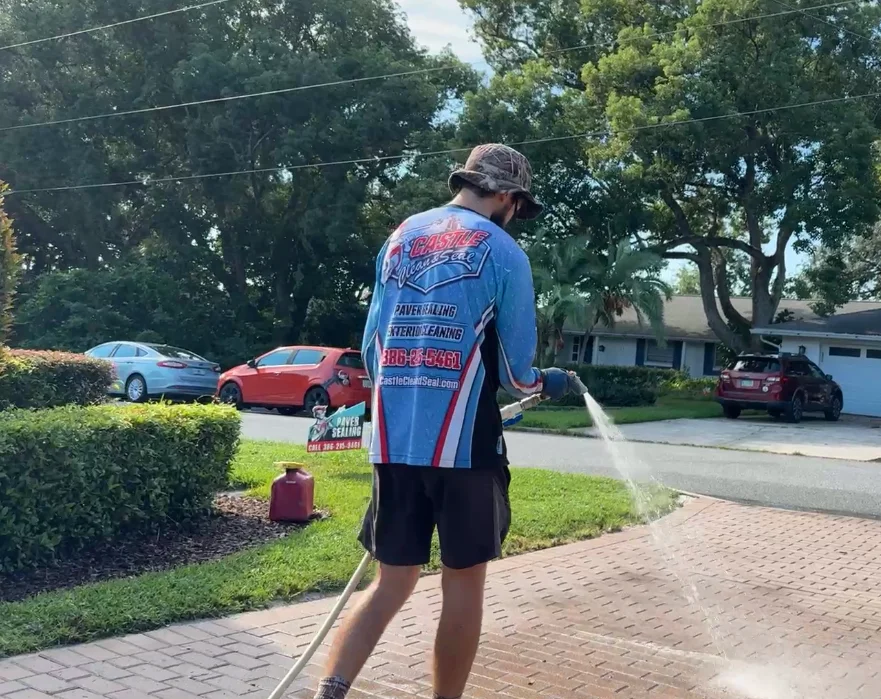
100% biodegradable algaecide kills algae, mold, mildew and weeds at the root, not just on the surface.
Why it matters
It's sodium hypochlorite, the same chlorine that's already in your pool. It won't upset your pool chemistry, and it breaks down into salt and water.
Step 02 — Deep clean
Pavers aren't stone. They're dyed concrete
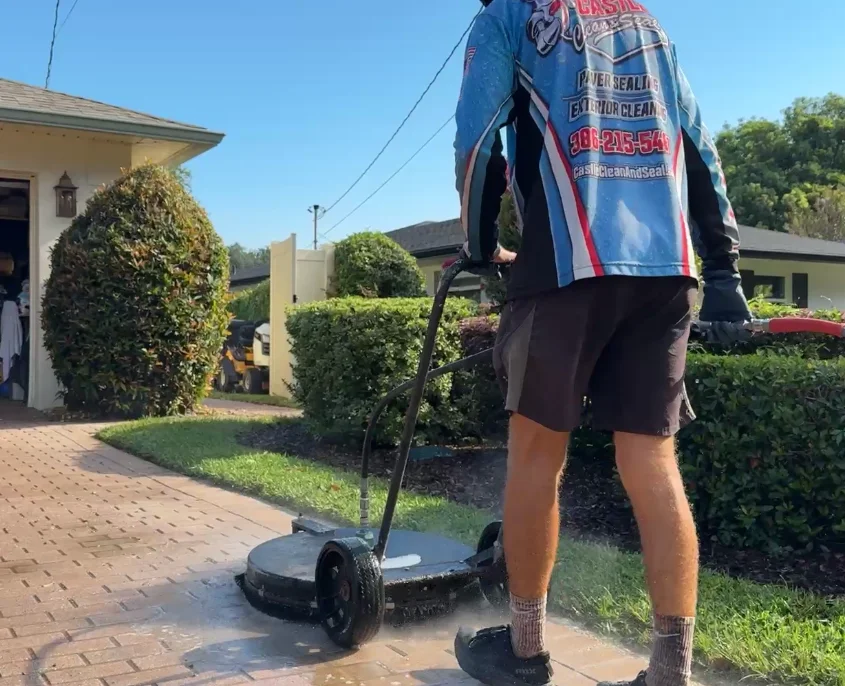
High pressure etches the surface and pulls the dye out. We clean with high volume and low pressure instead.
Why it matters
Etched pavers hold dirt and grow algae back faster. This is the single thing that separates us from most companies in this market.
Step 03 — Joint stabilization
Dry sand leaves air pockets. Water doesn't
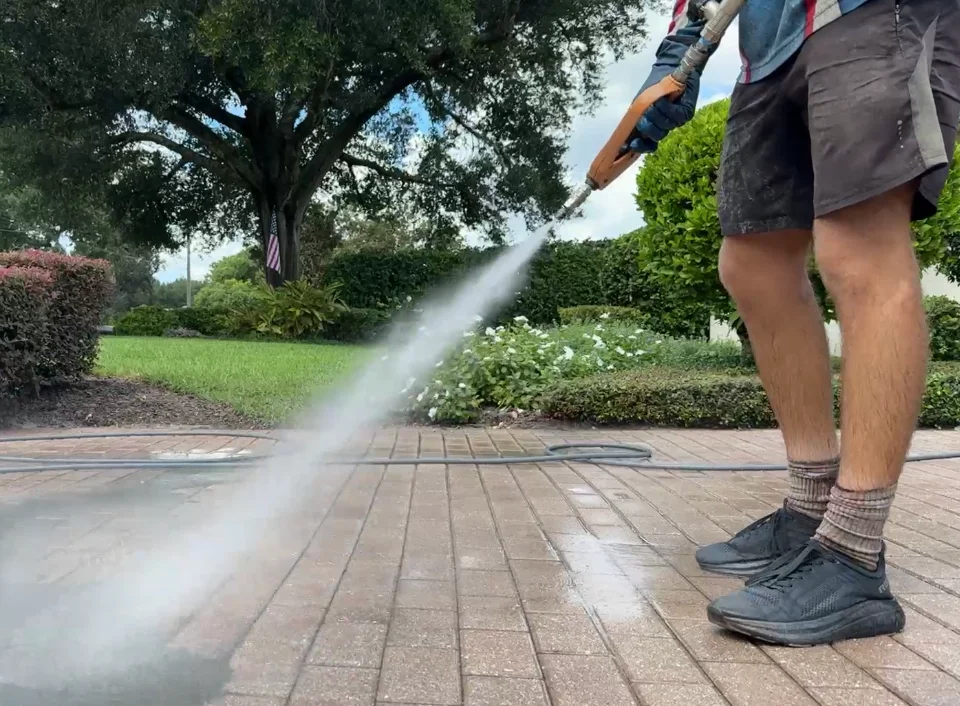
Most crews sweep sand in dry. We pour a line of joint-stabilizing sand and drive it down with water.
Why it matters
The weight of the water carries sand to the bottom of the joint and compacts it. Fewer air pockets means far less weed growth. Nothing keeps weeds away permanently.
Step 04 — Seal
The first coat locks the sand down
A heavy flood coat stabilizes the joints and the pavers. Premium gets two coats. Platinum gets three.
Before we start
Before any sealer goes down we re-check every joint for proper sand level, then wait 45 to 60 minutes.
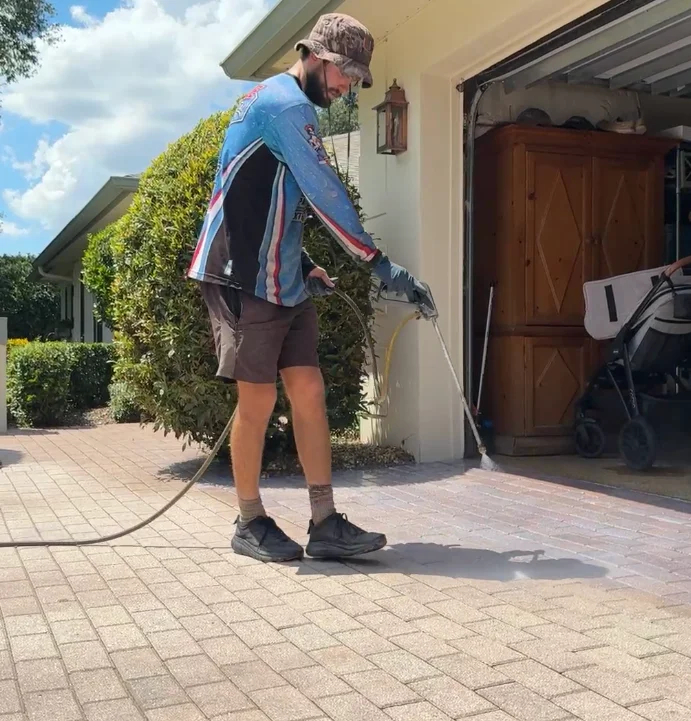
Around the pool
Around pool coping we roll the sealer on by hand so nothing sprays into the water. Everything else is sprayed.
Water-based, because Florida
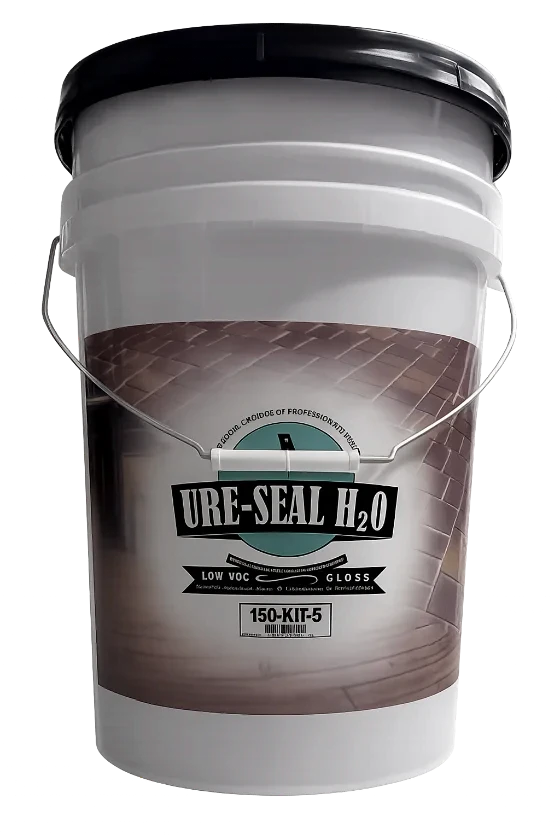
It breathes, so moisture escapes instead of clouding under the film.
It can go down on a damp surface. We like the sand slightly damp so the sealer carries deeper into the joints.
That's why we finish in one day, and why rain after the last coat won't undo the work.
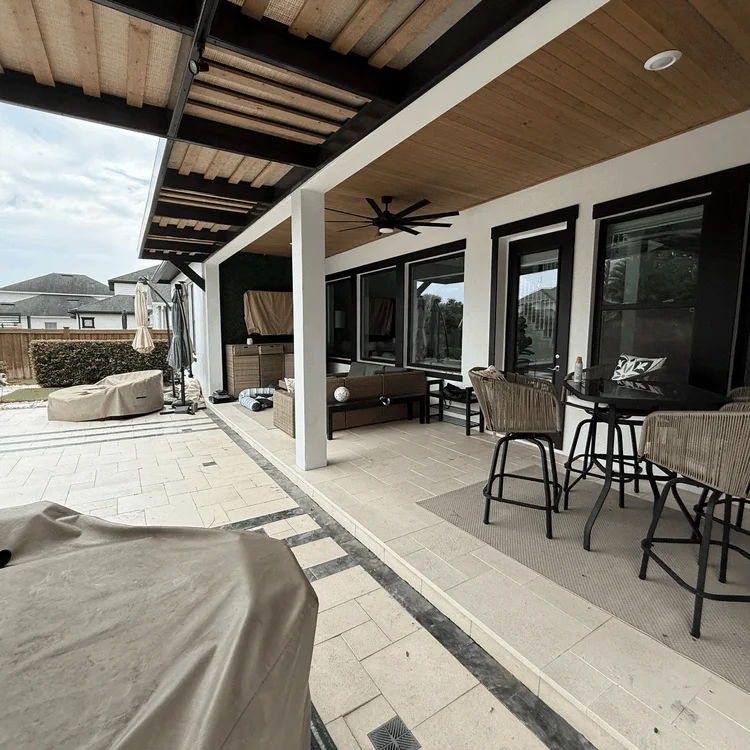
What to expect for the first 48 hours

Move the small stuff. We'll get the rest
Pots, mats, shoes, toys. Our team moves the heavy pieces when we arrive.
If you'd like us to come back and set the furniture after it cures, that's a one-time charge.
PAVER CLEANING & SEALING — CENTRAL FLORIDA
What actually happens to your Pavers
The full process, start to finish, and why each step is the one most companies skip.
15 YEARS SEALING PAVERS IN CENTRAL FLORIDA.
One of the few companies in the entire state that specializes in just paver and natural stone sealing.
Locally owned, based in Deltona. Licensed and insured. We work on hardscape only, in 3 counties.
Florida is hard on pavers
Most people call us about algae, mold, mildew and weeds. We start somewhere else.
Algae, mold and weeds come after that. Nothing keeps weeds out permanently — most clients go a few months, and some have gone two and a half years.
A bad seal job is worse than no seal job
Skipped prep and solvent-based sealer trap moisture under the surface. That is what turns pavers white, cloudy and peeling.
This is why we have spent the last 15 years developing the four-step process we call the "Castle Shield."
Almost everything that goes wrong with sealed pavers in Florida goes wrong before the sealer is ever opened.
Step 01 — Kill the growth
We treat what's alive before we touch it
100% biodegradable algaecide kills algae, mold, mildew and weeds at the root, not just on the surface.
Why it matters
It's sodium hypochlorite, the same chlorine that's already in your pool. It won't upset your pool chemistry, and it breaks down into salt and water.
Step 02 — Deep clean
Pavers aren't stone. They're dyed concrete
High pressure etches the surface and pulls the dye out. We clean with high volume and low pressure instead.
Why it matters
Etched pavers hold dirt and grow algae back faster. This is the single thing that separates us from most companies in this market.
Step 03 — Joint stabilization
Dry sand leaves air pockets. Water doesn't
Most crews sweep sand in dry. We pour a line of joint-stabilizing sand and drive it down with water.
Why it matters
The weight of the water carries sand to the bottom of the joint and compacts it. Fewer air pockets means far less weed growth. Nothing keeps weeds away permanently.
Step 04 — Seal
The first coat locks the sand down
A heavy flood coat stabilizes the joints and the pavers. Premium gets two coats. Platinum gets three.
Before we start
Before any sealer goes down we re-check every joint for proper sand level, then wait 45 to 60 minutes.
Around the pool
Around pool coping we roll the sealer on by hand so nothing sprays into the water. Everything else is sprayed.
Water-based, because Florida
It breathes, so moisture escapes instead of clouding under the film.
It can go down on a damp surface. We like the sand slightly damp so the sealer carries deeper into the joints.
That's why we finish in one day, and why rain after the last coat won't undo the work.
What to expect for the first 48 hours
Move the small stuff. We'll get the rest
Pots, mats, shoes, toys. Our team moves the heavy pieces when we arrive.
If you'd like us to come back and set the furniture after it cures, that's a one-time charge.