Paver Sealing Tips
October through May is your ideal sealing window in Central Florida — but each month has different advantages. Here's a month-by-month breakdown so you can time your project for the best possible results.

Chance Sixma
🗓️
Feb 20, 2026
📖
8 Min Read
🔄
Updated -
Feb 20, 2026
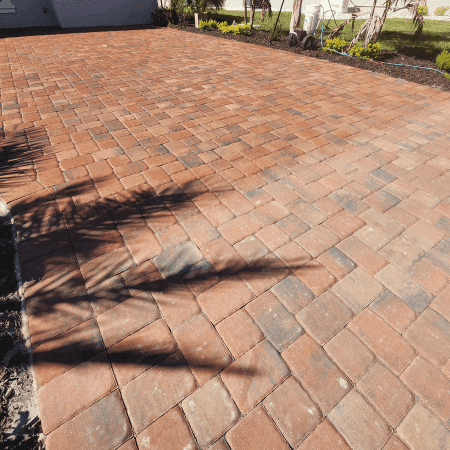
Dry-season conditions in Central Florida provide the ideal environment for paver sealer to cure properly — delivering results that last years, not months.
Key Takeaway
The easiest time to seal pavers in Central Florida is during the dry season — October through May — when humidity is lower, rainfall is minimal, and temperatures are moderate. February through April is the sweet spot with the most consistently ideal conditions. However, paver sealing can be done year-round when you use the right products and process. Castle Clean & Seal uses a water-based sealer manufactured specifically for Florida's humid climate that is waterproof as soon as it's applied. We schedule strategically around weather in every season — prepping on one day and sealing the next when needed — and we stand behind every project with a warranty regardless of when it's completed. The best time to seal your pavers is when they need it, not six months from now.
WHEN IS THE BEST TIME TO SEAL PAVERS IN CENTRAL FLORIDA?
The best time to seal pavers in Central Florida is during the dry season, which runs from October through May. During these months, afternoon humidity typically drops below 70%, rainfall is at its lowest, and temperatures stay within the ideal 50°F–90°F curing window that water-based sealers need to bond properly.
If you’re narrowing it down further, February through April tends to be the sweet spot for homeowners in Deltona, Orlando, Daytona Beach, Sanford, and Lake Mary. You get consistently low rainfall (under 3 inches per month on average), moderate temperatures in the 70s and 80s, and long enough daylight hours to complete full-day projects with time for the sealer to begin curing before sunset.
That said, timing isn’t just about picking the right month — it’s about understanding why weather conditions matter and working with a company that knows how to manage them. At Castle Clean & Seal, we’ve completed over 1,135 paver restoration projects across Volusia, Seminole, and Orange Counties year-round — including during the summer rainy season. While dry-season months offer the most forgiving conditions, we seal successfully in every season because we use a water-based sealer manufactured specifically for Florida’s humid climate and we’ve built our scheduling process around real Florida weather. The information below will help you understand what makes each season different, and why the right company and the right products matter more than the calendar.
WHY DOES TIMING MATTER FOR PAVER SEALING IN FLORIDA?
Paver sealer is a chemical product that needs specific conditions to cure correctly. When water-based sealer is applied to a clean paver surface, it bonds to the pores of the stone as the water carrier evaporates. If that evaporation process is disrupted by rain, extreme humidity, or temperature swings, the sealer can’t form a proper bond.
Understanding these challenges is important — not because they should stop you from getting your project done, but because they explain why the product and company you choose matters more than the month on the calendar. Here’s what can go wrong when paver sealing is done without the right preparation.
High Humidity Can Cause White Hazing (With the Wrong Sealer)
When the relative humidity is above 75–80%, solvent-based sealers struggle to cure evenly. The result is a milky, white haze across your pavers — sometimes called “blushing.” This is the single most common paver sealing complaint in Florida, and it’s almost always caused by using a solvent-based product that traps moisture underneath. Water-based sealers designed for Florida’s climate breathe, allowing moisture to escape — which is exactly why Castle Clean & Seal uses them exclusively.
Rain Can Disrupt Fresh Sealer (Without Proper Planning)
Most sealers need a minimum of 4–6 hours of dry conditions after application to begin curing. If rain hits before that window closes, the sealer can be diluted or washed off. In Central Florida’s summer months, afternoon thunderstorms roll in almost daily between 2:00 and 5:00 PM. This is a challenge, but it’s manageable with strategic scheduling. At Castle Clean & Seal, our sealer is waterproof as soon as it’s applied, and we plan our application timing around the forecast to protect every project.
Extreme Heat Can Cause Flash-Drying
When the paver surface temperature exceeds 100°F — which happens on south-facing driveways in July and August — sealer can dry too quickly on the surface before it penetrates into the pores. This creates a thin, brittle film that peels and flakes within weeks. The solution is timing the application for the right time of day — early morning or late afternoon — when surface temperatures are lower. This is standard practice for any experienced Florida paver sealing company.
Cold Temperatures Require Adjusted Timing
While Central Florida rarely sees true cold snaps, overnight temperatures occasionally dip below 50°F between December and February. Sealer shouldn’t be applied below 50°F because the curing process can stall. At Castle Clean & Seal, we handle this by prepping the job during cooler morning hours and applying sealer in the afternoon once surface temperatures climb well above 50°F — which they almost always do in Central Florida, even in January.
💡 Castle Pro Tip
The textbook-ideal conditions for paver sealing are: surface temperature between 50°F and 90°F, relative humidity below 70%, no rain in the forecast for at least 12 hours, and enough daylight for 4–6 hours of curing time. But Florida rarely gives you perfect textbook conditions — which is why we use a sealer engineered for this climate and adjust our scheduling to work with whatever the weather brings. At Castle Clean & Seal, we manage the conditions so you don't have to worry about them.
MONTH-BY-MONTH PAVER SEALING GUIDE FOR CENTRAL FLORIDA
Not every month during the dry season is created equal. Here’s what to expect month by month so you can plan your paver sealing project around the conditions that will give you the longest-lasting results.
October: The Season Opens
October marks the transition from Central Florida’s rainy season to the dry season. Average rainfall drops from about 6 inches in September to roughly 3.3 inches in October, and humidity starts to decrease. Early October can still catch the tail end of afternoon storms, but by mid-to-late October, conditions improve significantly. Temperatures are still warm (highs in the mid-80s), so sealer cures quickly during daytime hours. Verdict: Good — schedule for the second half of the month for the safest conditions.
November: Excellent Conditions Begin
November is when Central Florida’s paver sealing season really hits its stride. Average rainfall drops to about 2.4 inches, humidity comes down noticeably, and temperatures settle into the comfortable mid-to-upper 70s. There’s plenty of daylight, and the risk of surprise storms is minimal. This is also when many homeowners start thinking about curb appeal before holiday gatherings. Verdict: Excellent — one of the best months for paver sealing in Central Florida.
December: Prime Time
December continues the excellent dry-season trend with some of the lowest rainfall of the year (around 1.3–1.5 inches on average) and moderate temperatures in the low-to-mid 70s. Occasional cold fronts can push overnight lows into the 40s or even upper 30s in parts of Volusia and Seminole Counties, but this doesn’t stop us — we prep projects in the cooler morning hours and apply sealer in the afternoon once surface temperatures climb above 50°F. Verdict: Excellent — great conditions with easy workarounds for the occasional cool morning.
January: Great Conditions, Easy Cold-Weather Workarounds
January is Central Florida’s coolest month, with average highs around 68–72°F and lows around 50°F. Rainfall is minimal (about 2.8 inches on average), and humidity is at or near its lowest point of the year. On cooler mornings, we handle all the prep work — cleaning, weed treatment, joint-stabilizing sand — while surface temperatures warm up, then apply sealer in the afternoon when temps are comfortably above 50°F. We never apply sealer below 50°F, but Central Florida’s afternoons almost always clear that threshold even in January. Verdict: Great — we use the cool mornings productively and seal when conditions are perfect in the afternoon.
February: The Sweet Spot
February might be the single best month for paver sealing in Central Florida. Temperatures start warming up (highs in the low-to-mid 70s), rainfall remains very low (about 2.8 inches), and humidity stays among the lowest of the year. Days are getting longer, giving you more curing time before sunset. It’s warm enough for sealer to bond well but cool enough to avoid flash-drying. This is when Castle Clean & Seal’s schedule fills up fastest. Verdict: Excellent — the Goldilocks month for paver sealing.
March: Driest Month of the Year
March is statistically the driest month in Central Florida, averaging only about 1.3 inches of rainfall. Humidity reaches its lowest point (around 67–70% average), and temperatures climb into the upper 70s. The longer daylight hours mean more working time and more curing time. The only consideration is that spring break traffic can make scheduling a bit more competitive. Verdict: Excellent — arguably the best weather conditions of the entire year.
April: Last of the Easy Months
April remains dry and warm, with temperatures pushing into the low-to-mid 80s and rainfall still relatively low (around 2.5 inches). Humidity begins to creep up slightly compared to March, but conditions are still well within the ideal range for paver sealing. By late April, you may start to see the very first hints of the summer weather pattern. Verdict: Great — get your project done before May if possible.
May: The Transition Month
May is the swing month in Central Florida. Early May often still feels like dry season, but by mid-to-late May, the summer rain pattern starts to kick in. Average rainfall jumps to about 3.2 inches, humidity starts climbing, and afternoon thunderstorms become more common. That said, there are still plenty of workable days throughout May — it just requires more careful scheduling. Verdict: Good — smart scheduling makes May completely workable.
June–September: Absolutely Doable With the Right Team
Central Florida’s summer rainy season brings more rainfall, daily afternoon thunderstorms, and higher humidity — which is why many paver sealing companies tell you to wait until October. But at Castle Clean & Seal, we’ve built our process around Florida’s real-world conditions, and we successfully complete projects year-round — including throughout the summer months.
Here’s how we make it work. The water-based sealer we use is manufactured specifically for Florida’s damp, humid climate. Unlike solvent-based products that trap moisture and fail in humidity, our sealer is designed to perform in these conditions. It’s also waterproof as soon as it’s applied — meaning even if an unexpected shower rolls through after application, it won’t permanently damage the job.
We’ve also gotten very good at scheduling around summer weather. On days when rain looks likely, we’ll prep your project — weed treatment, pressure cleaning, joint stabilizing sand — and come back the next day to apply the sealer when conditions are clear. This split-day approach means your project stays on track without compromising quality.
And if your project does get significant rain after completion and the finish doesn’t look 100% the way it should, we come back and make it right at no additional cost. That’s our commitment to every customer regardless of the season.
Verdict: Summer works — you just need a company that knows how to work in Florida’s climate, uses the right products, and stands behind their work. Don’t let anyone tell you that you have to wait six months to protect your pavers.
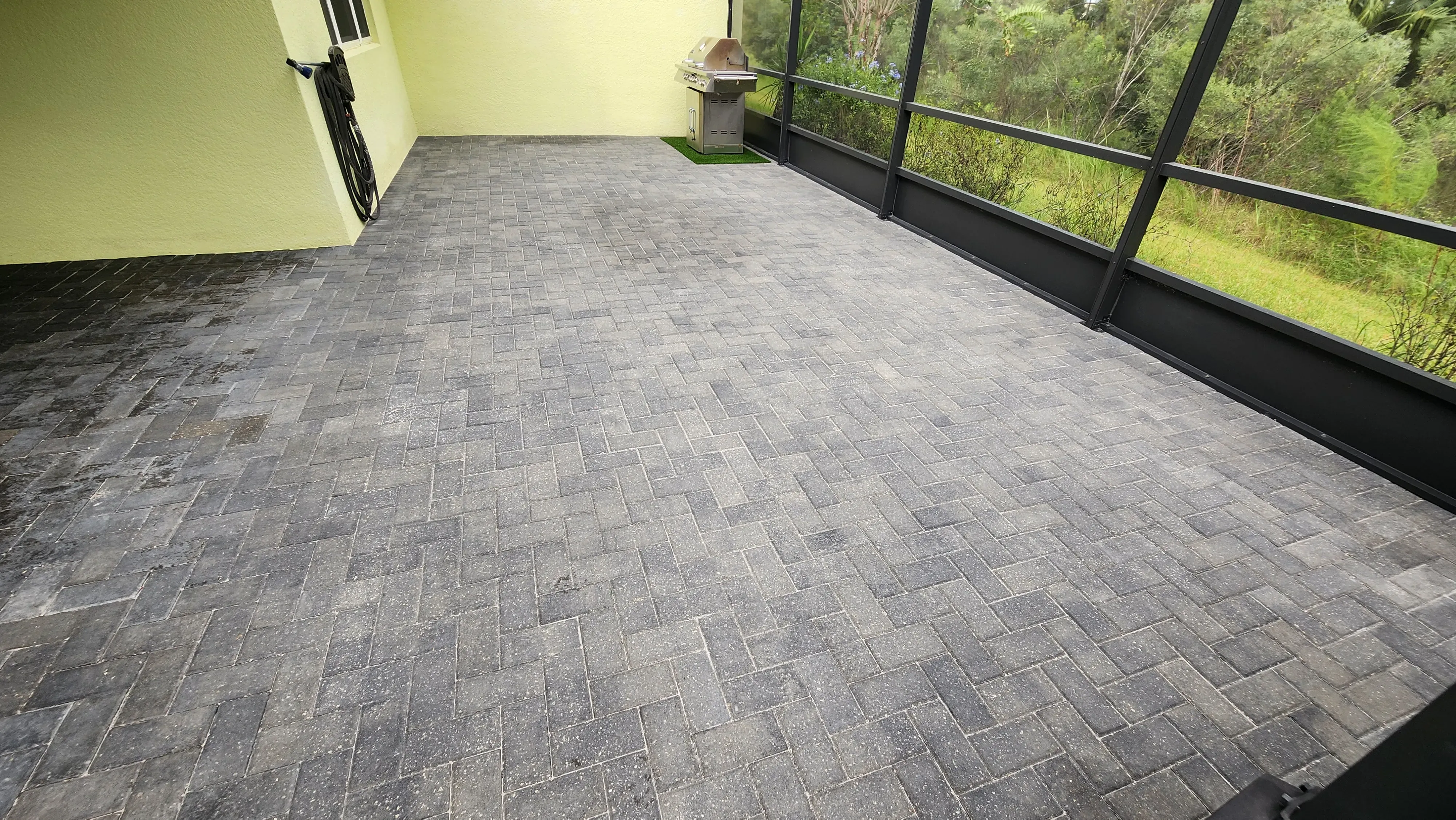
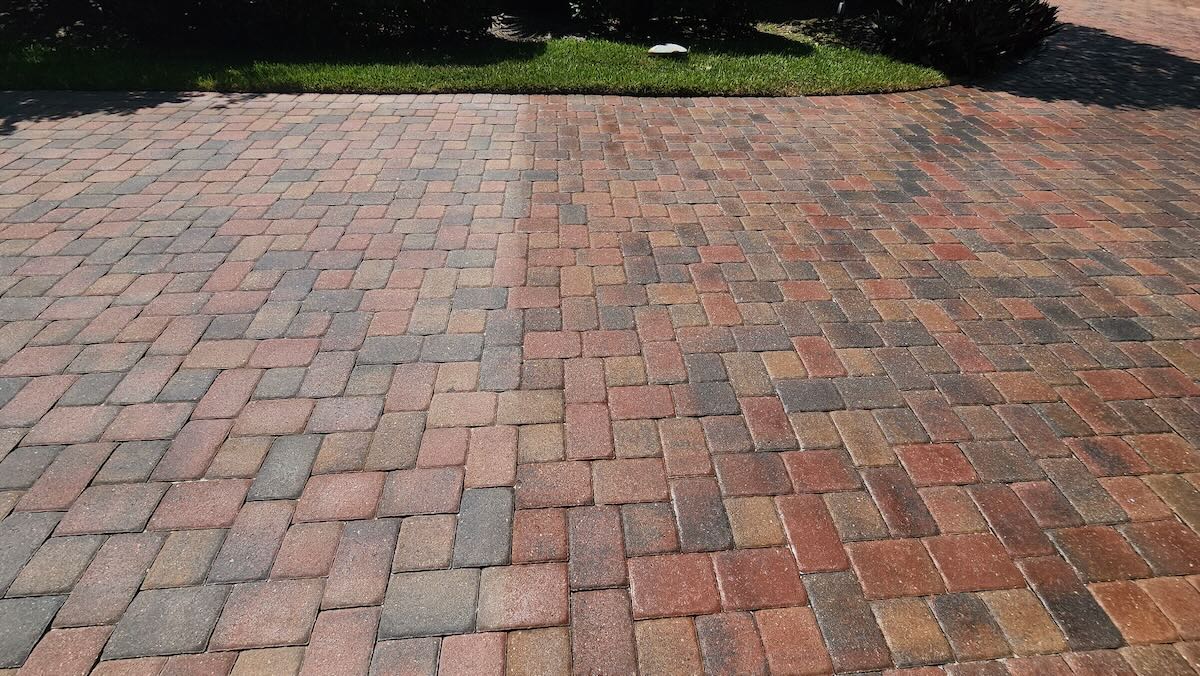
BEFORE
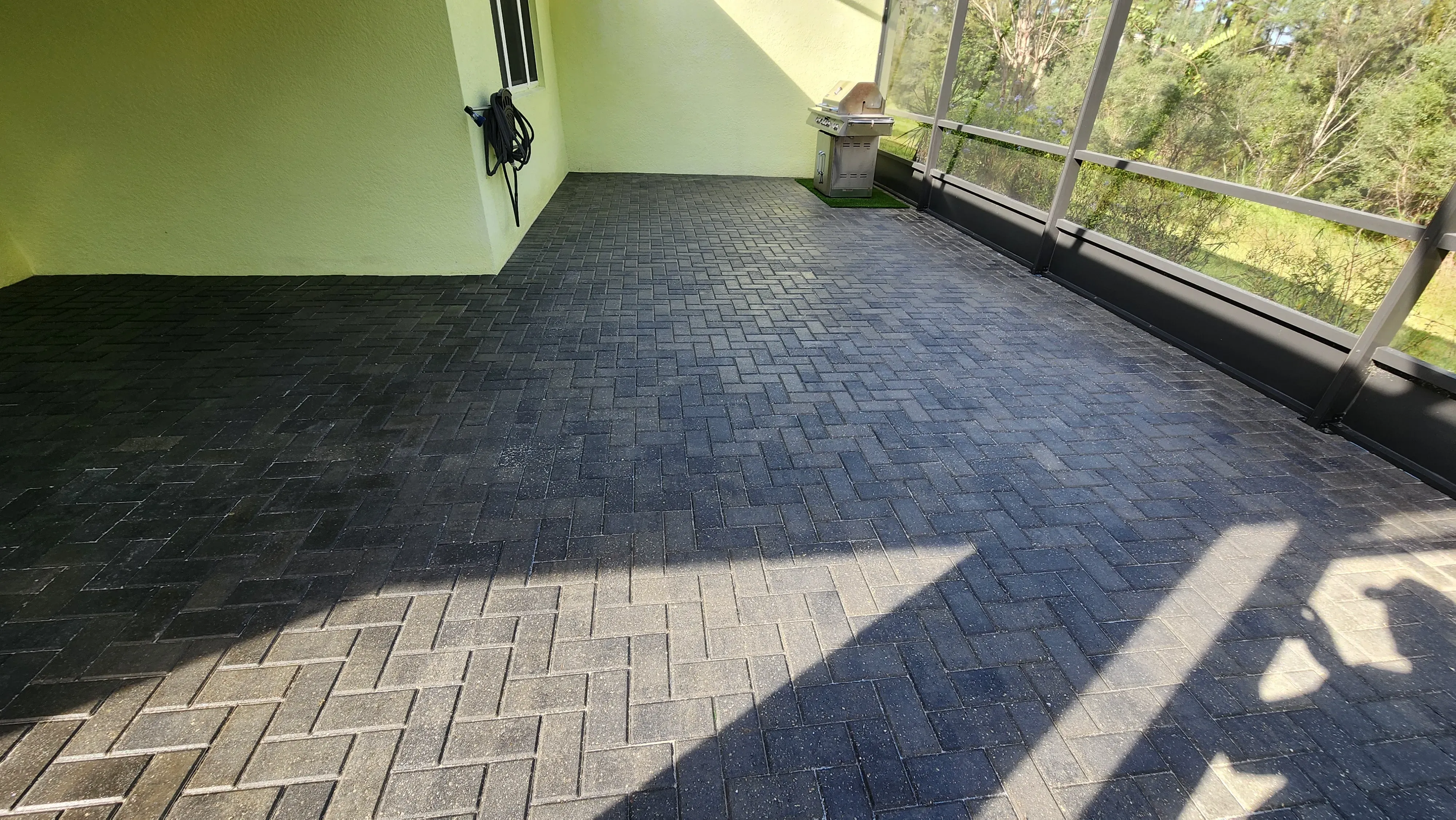
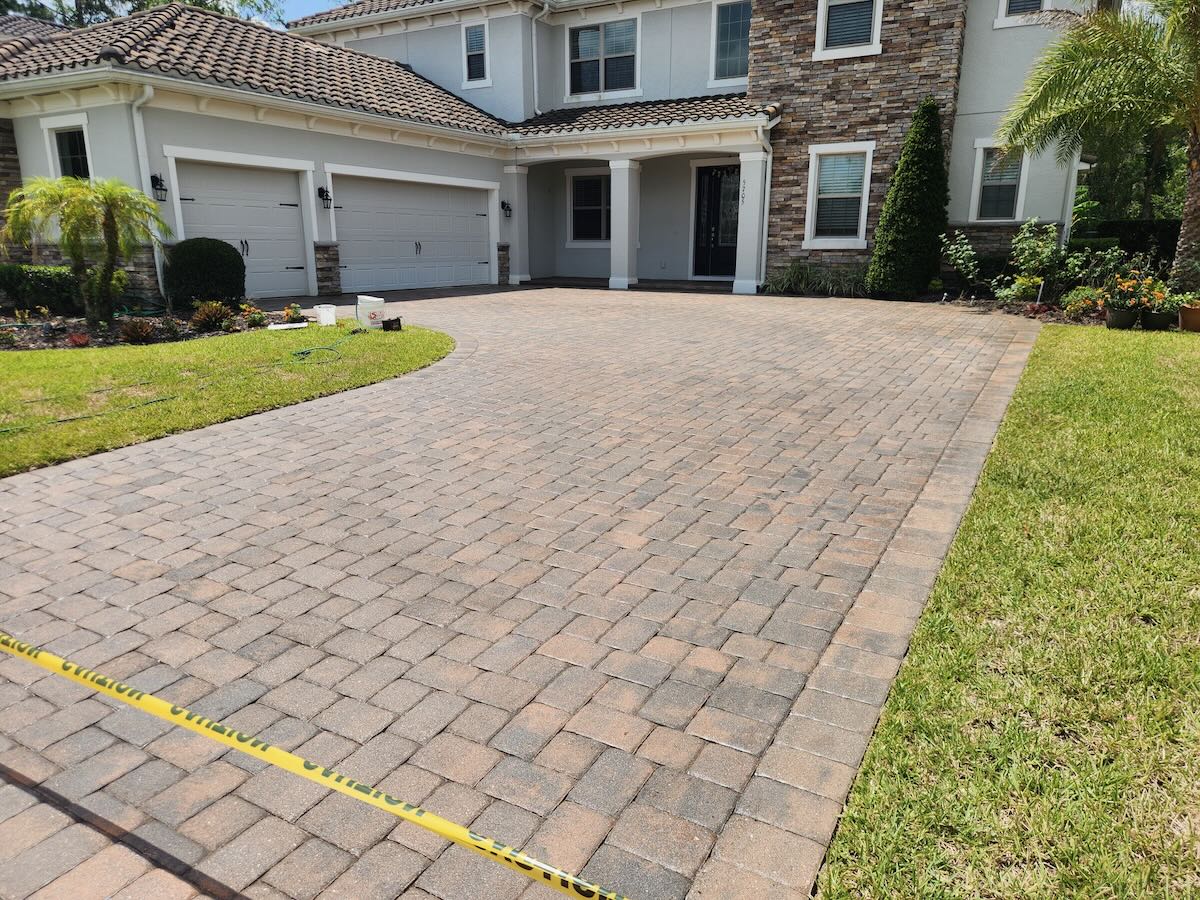
AFTER
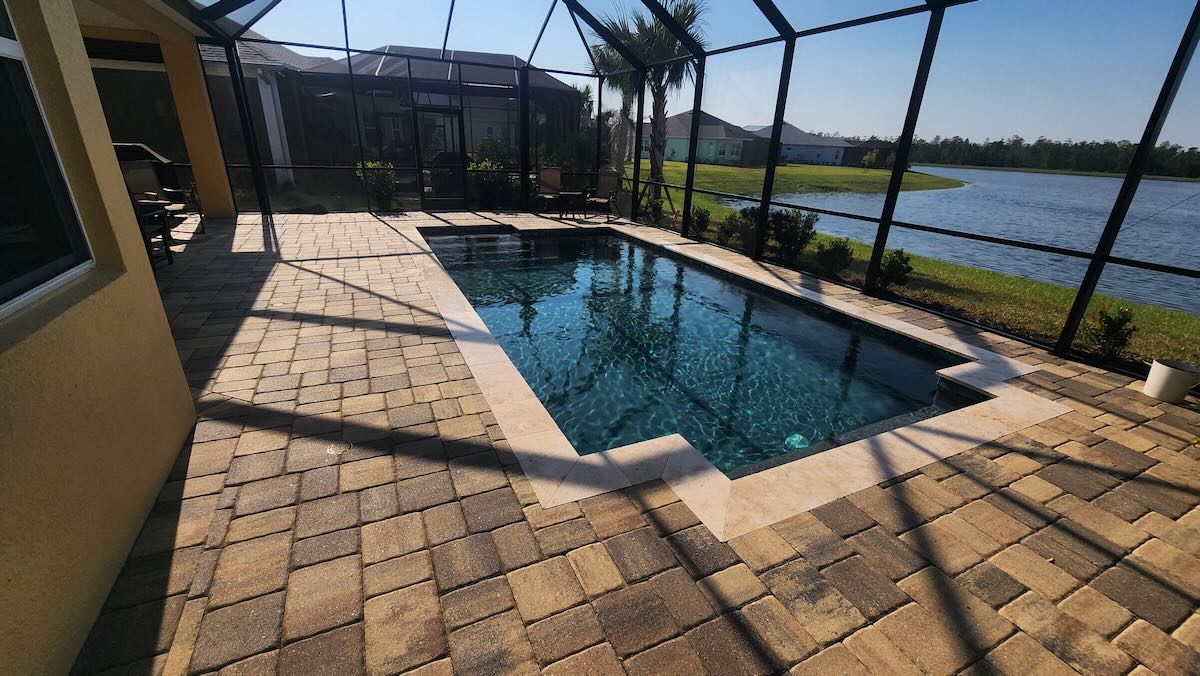
This Daytona Beach patio was sealed in February during ideal dry-season conditions — low humidity, no rain in the forecast, and surface temperatures in the mid-70s. The sealer cured perfectly and delivered a rich, even finish with full color restoration.
HERE'S A QUICK LOOK AT THE CASTLE SHIELD 4-STEP SYSTEM
1
Kill It at the Root
We apply a 100% biodegradable algaecide that kills mold, algae,
mildew, and weeds at the source — not just the surface. This ensures a
deep clean and stops regrowth before it starts.
2
Strip Away Years of Buildup
Our high-volume, low-pressure system blasts away dirt, grime, and
organic growth — without damaging your pavers. Safe for the surface.
Brutal on the mess.
3
Lock Out Weeds
We use a wet sand process to force joint-stabilizing sand deep into
every gap. The water compacts it tight — blocking weeds and
preventing erosion for years.
4
Protect the Investment
Finally, we apply 2-3 coats of premium water-based sealer to lock in
the color, repel moisture, and keep your pavers looking fresh for years
— not months.
💡 Castle Pro Tip
When you book with Castle Clean & Seal, we always build weather contingency into our scheduling. If conditions aren't ideal on your scheduled day, we'll reschedule rather than apply sealer in bad conditions. A delay of a day or two is always better than a seal that fails in a few months.
CAN YOU SEAL PAVERS IN THE RAIN? WHAT ABOUT AFTER RAIN?
This is one of the most common questions we get from homeowners in Deltona, Orlando, Daytona Beach, and across Central Florida — especially when an unexpected storm pops up.
Can you seal pavers in the rain? No. Sealer should never be applied during active rainfall. Rain dilutes the sealer before it can bond to the paver surface, resulting in poor adhesion and an uneven, blotchy finish. If rain is in the forecast within 4–6 hours of application, the project might need to be postponed, but that should be determined by the paver sealing company.
Can you seal pavers after rain? Yes, but only after the pavers have fully dried. After a light shower, pavers in full sun may dry within a few hours. After a heavy rain, it can take up to 24 hours for pavers to dry completely — especially in shaded areas, pool deck areas, or sections with poor drainage. Sealing over damp pavers traps moisture underneath the sealer, which can lead to the same white hazing problem caused by high humidity. That being said, if the proper sealer is used by a trained technician they can actually apply it when the pavers are slightly damp, but not with pooling water on the surface. This can sometimes help carry the sealer further into the pores of the pavers.
YOU DON'T HAVE TO WAIT — WE SEAL YEAR-ROUND
One of the biggest myths in our industry is that you have to wait for October to seal your pavers. That might be true for companies using cheap solvent-based sealers or companies that don't know how to manage Florida weather — but it's not true for Castle Clean & Seal.
We work year-round across Central Florida because we've invested in the right products and processes for this climate. Our water-based sealer is manufactured specifically for Florida's humid, wet conditions. It's waterproof as soon as it's applied, and it breathes — meaning it won't trap moisture underneath the way solvent-based products do, even in summer humidity.
We've also refined our scheduling process to work with Florida's weather rather than against it. During the rainy season, we structure projects in phases — prepping the job (weed treatment, pressure cleaning, joint stabilizing sand) on one day and coming back to seal the next day when the forecast is clear. This split-day approach means we're never rushing to beat a storm or gambling on the weather.
What happens if rain comes after we seal? Our sealer is waterproof on contact, so a passing shower won't ruin the job. But if your project takes significant rain shortly after completion and the finish doesn't look 100% the way it should, we come back and make it right — no extra charge. That's our promise every season, every project.
What about cold weather? We don't apply sealer below 50°F, but in Central Florida, afternoon temperatures almost always exceed that threshold even in the coolest months. On cold mornings, we use the cooler hours for prep work and seal in the afternoon when surfaces have warmed up. It's a simple adjustment that never impacts your results.
The bottom line: if your pavers need sealing, the best time to do it is now — not six months from now. Every month you wait is another month of UV damage, weed growth, joint sand erosion, and fading that could have been prevented. Castle Clean & Seal is equipped and experienced enough to deliver great results in any season, and we back every project with a warranty regardless of when it's completed.
When you're ready to protect your pavers — no matter the season — request your free same-day quote or call us at (386) 215-5461. We serve homeowners across Deltona, Daytona Beach, Orlando, Sanford, Lake Mary, Port Orange, Ormond Beach, and 50+ other cities throughout Volusia, Seminole, and Orange Counties.
HOW CASTLE CLEAN & SEAL HANDLES WEATHER IN CENTRAL FLORIDA
Weather management is built into every project we do — it's one of the things that separates us from companies that only work half the year. Here's how we deliver consistent results in every season.
We use sealer made for Florida. Our premium water-based sealer was manufactured specifically for Florida's humid, wet climate. It's waterproof as soon as it's applied, it breathes to prevent moisture trapping, and it cures properly in the humidity levels that are normal for Central Florida — even in summer. This is the foundation of why we can work year-round while other companies can't.
We structure projects around the forecast. During the rainy season, we'll often split a project across two days — prepping one day and sealing the next — so we can take advantage of the best weather window for sealer application. During the cooler months, we schedule prep work for cooler morning hours and seal in the warmer afternoon. Every project gets a customized plan based on the weather that week.
We monitor forecasts for your specific area. Weather can vary significantly between coastal Daytona Beach and inland Deltona on the same day. We check multiple weather sources for your exact location, not just a general Central Florida forecast.
We stand behind every project. If significant rain impacts a recently completed job and the finish doesn't look the way it should, we come back and make it right. That's our commitment regardless of the season — and it's backed by the warranty that comes with every Castle Clean & Seal project.
We communicate proactively. If conditions change on your scheduled date, we call you before we show up — not after. And if we need to adjust the schedule, we move quickly to get your project completed as soon as conditions allow. No games, no guessing.
What month is best to seal pavers in Florida?
Can you seal pavers in summer in Florida?
How long does paver sealer need to dry before rain?
Does paver sealing help prevent weeds?
How much does it cost to seal pavers in Central Florida?
READY TO PROTECT YOUR INVESTMENT?
GET YOUR FREE SAME-DAY
QUOTE
Join 1,135+ happy Central Florida homeowners. Licensed & insured.
Takes 30 seconds · Same-day response · No obligation