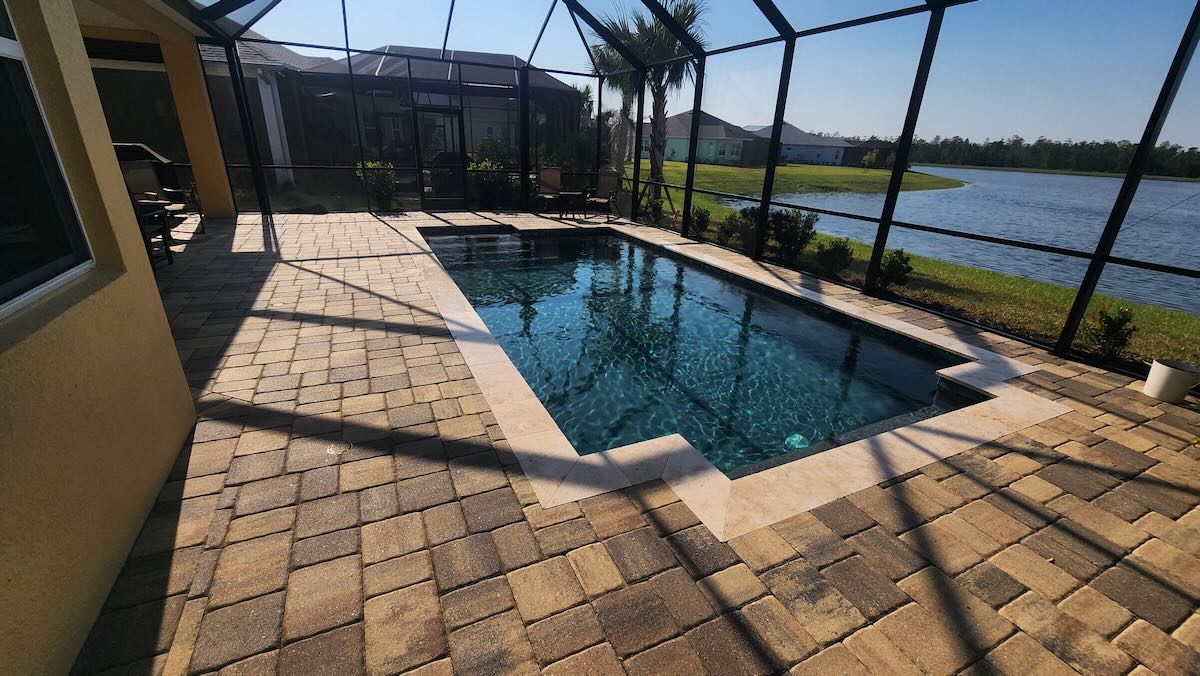
Paver Sealing Tips
White, cloudy, milky pavers after sealing? You're not alone — it's the most common paver sealing failure in Florida. Here's exactly what causes it, how to identify your specific problem, and the only way to fix it permanently.

Chance Sixma
🗓️
Mar 2, 2026
📖
8 Min Read
🔄
Updated -
Mar 2, 2026
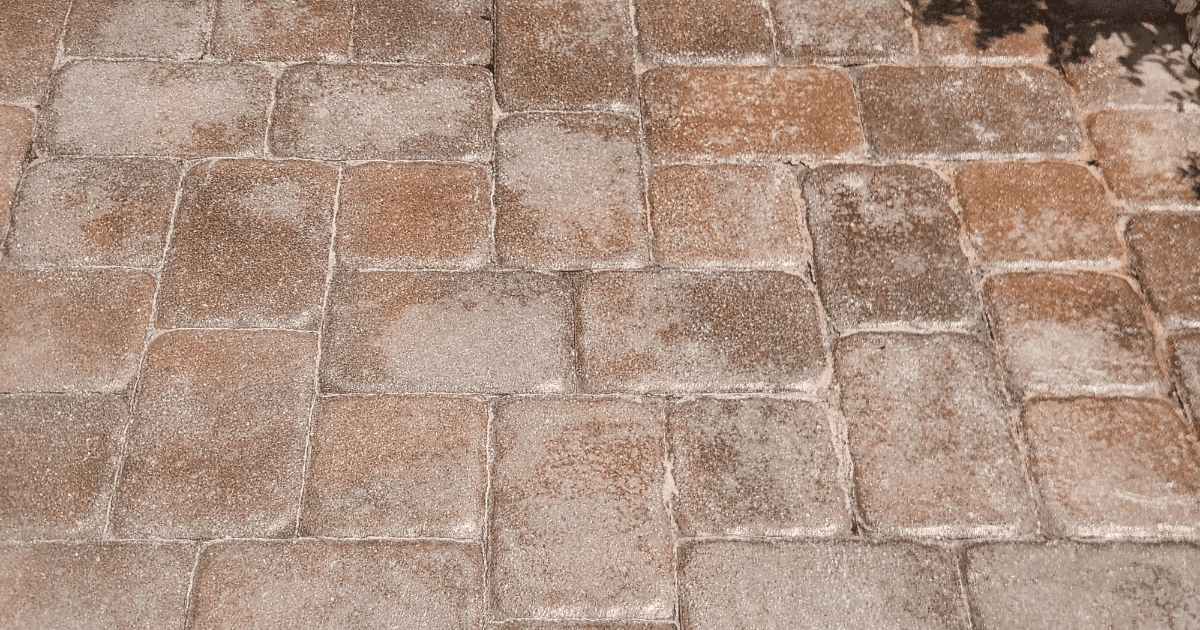
White, milky paver sealer is the number one complaint from Florida homeowners — and it's almost always caused by the wrong type of sealer for this climate.
Key Takeaway
White paver sealer in Florida is almost always caused by moisture trapped underneath a non-breathable solvent-based sealer. Florida's high humidity, frequent rain, and shallow water table push constant moisture through your pavers — and when that moisture hits an airtight sealer film, it gets trapped and turns white. The fix requires chemically stripping the failed sealer and resealing with a breathable water-based product designed for Florida's climate. You cannot fix it by sealing over the problem. At Castle Clean & Seal, we prevent white hazing by exclusively using a premium water-based sealer that breathes, allowing moisture to escape naturally. About 20% of our projects involve correcting failed sealer from other companies.
WHY YOUR PAVER SEALER TURNED WHITE — THE SHORT ANSWER
If your sealed pavers have turned white, cloudy, or milky, moisture is almost certainly trapped underneath the sealer. This happens when a non-breathable sealer — usually solvent-based — is applied over pavers that contain moisture, or when Florida's constant humidity pushes moisture up through the paver after sealing. The sealer creates an airtight lid, the moisture has nowhere to go, and the result is that ugly white haze that makes your pavers look worse than they did before they were sealed.
The technical term is "blushing" or "delamination," and it's the single most common paver sealing failure in Florida. We see it on driveways, pool decks, patios, and walkways across Deltona, Daytona Beach, Orlando, Sanford, and every city we serve in Central Florida. The good news is that it can be fixed — but the fix isn't as simple as sealing over the problem.
THE 4 MAIN CAUSES OF WHITE PAVER SEALER IN FLORIDA
Not every white haze on pavers has the same root cause. Identifying what's actually happening on your pavers is the first step to fixing it correctly. Here are the four most common causes we encounter on projects across Central Florida.
Cause #1: Trapped Moisture Under Solvent-Based Sealer
This is by far the most common cause — responsible for the vast majority of white paver sealer complaints in Florida. Solvent-based sealers create a dense, non-breathable film over the paver surface. In a dry climate, this works fine. But in Central Florida, where humidity averages 74% year-round and the water table is notoriously shallow, moisture is constantly trying to move through your pavers.
When that moisture hits the underside of an airtight solvent-based film, it has nowhere to go. It gets trapped between the paver surface and the sealer, creating a cloudy, white appearance that spreads over time. You'll typically notice it first around pool deck edges, near irrigation heads, and in shaded areas where pavers stay damp longest. Eventually, it can spread across the entire sealed surface.
How to identify it: The white haze looks milky or cloudy rather than powdery. It's underneath the sealer, not on top of it. If you pour a small amount of water on the surface, the haze doesn't change — because the moisture is trapped below the coating, not sitting on top.
Cause #2: Efflorescence (Natural Salt Deposits)
Efflorescence is a completely different issue from sealer failure, though it can look similar to an untrained eye. It occurs when water-soluble calcium salts inside the concrete paver dissolve and migrate to the surface. When the water evaporates, it leaves behind a white, chalky, powdery deposit on the paver face.
Efflorescence is a natural process that happens with all concrete products. It's most common on newer pavers (installed within the past 1–2 years) because they contain the highest concentration of unreacted calcium hydroxide. Over time, as more of these salts leach out and get washed away by rain, the efflorescence diminishes on its own.
The problem gets worse when pavers are sealed before the efflorescence has had a chance to work itself out. If you seal too early — typically within 60–90 days of installation — you can trap those salt deposits underneath the sealer, making them much harder to remove later.
How to identify it: Efflorescence looks like a white, powdery or chalky film sitting on the surface of the paver. Unlike moisture-trapped hazing, you can often brush it off with your hand or a stiff broom. It tends to appear in patches rather than uniformly, and it's most noticeable in low areas where water pools or at the bottom of sloped driveways where moisture collects.
Cause #3: Improper Application
Even with the right sealer, poor application technique can cause white hazing. The most common application mistakes we see in Central Florida are applying sealer too thickly (causing it to trap moisture as it cures unevenly), sealing over a surface that wasn't cleaned thoroughly (dirt and grime prevent proper adhesion), and sealing pavers that are still damp from cleaning or recent rain.
Florida's humidity makes proper application technique even more critical than in drier climates. A sealer that's applied too thickly in 80% humidity will cure on the surface long before the layer closest to the paver has dried — trapping moisture in between and causing the same white haze you'd get from a bad product.
How to identify it: Application-related hazing tends to be patchy or uneven rather than uniform. You might see streaks, thick spots, or areas where the haze is significantly worse than others. This pattern reflects where the sealer was applied too heavily or where the surface wasn't properly prepped.
Cause #4: Incompatible Sealer Layering
This one catches a lot of homeowners off guard. If your pavers were previously sealed with a solvent-based product and a new coat of water-based sealer is applied on top — or vice versa — the two products won't bond properly. The new layer can trap moisture between the incompatible coats, causing rapid whitening and peeling.
This most commonly happens when a homeowner hires a new company to reseal pavers that were previously sealed by someone else. If the new company doesn't test what type of sealer is currently on the pavers before applying their product, you can end up with a worse situation than what you started with.
How to identify it: Incompatible layering typically shows up quickly — within days to a few weeks of the new application. The white haze often comes with peeling, flaking, or bubbling as the new sealer fails to adhere to the old one underneath.
⚠️ Common Mistake
Never apply more sealer over white, hazy pavers. It will not fix the problem — it will trap the moisture under an additional layer and the white haze will come back worse. We see this on roughly 1 in 5 projects we quote. The homeowner or a previous company tried to "fix" it by adding another coat, and now there are multiple layers of failed sealer that all need to be stripped. Fix it right the first time.
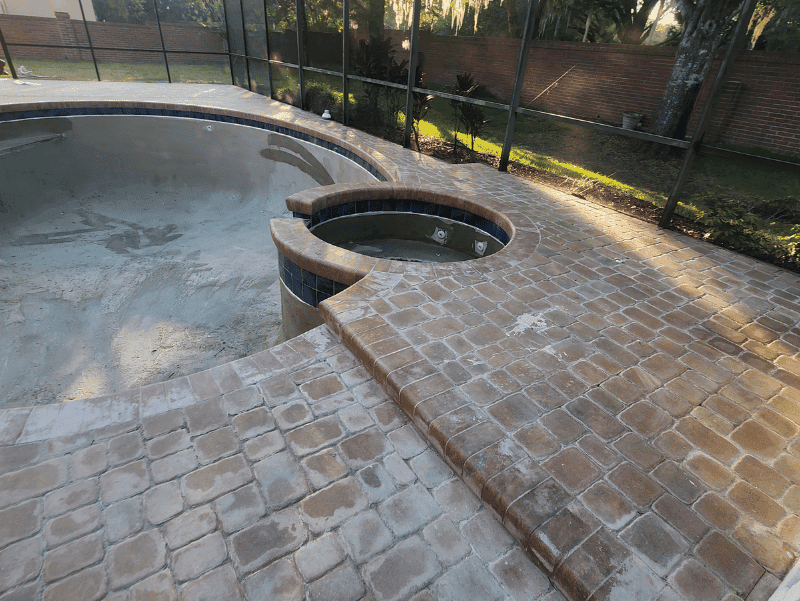
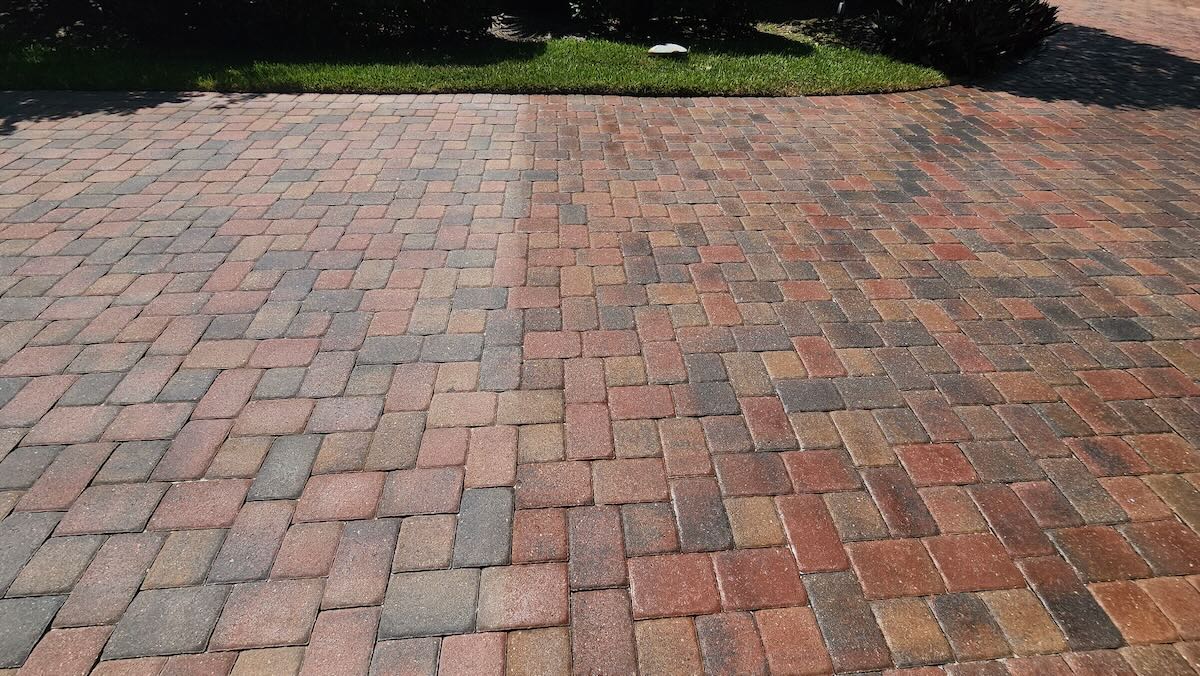
BEFORE
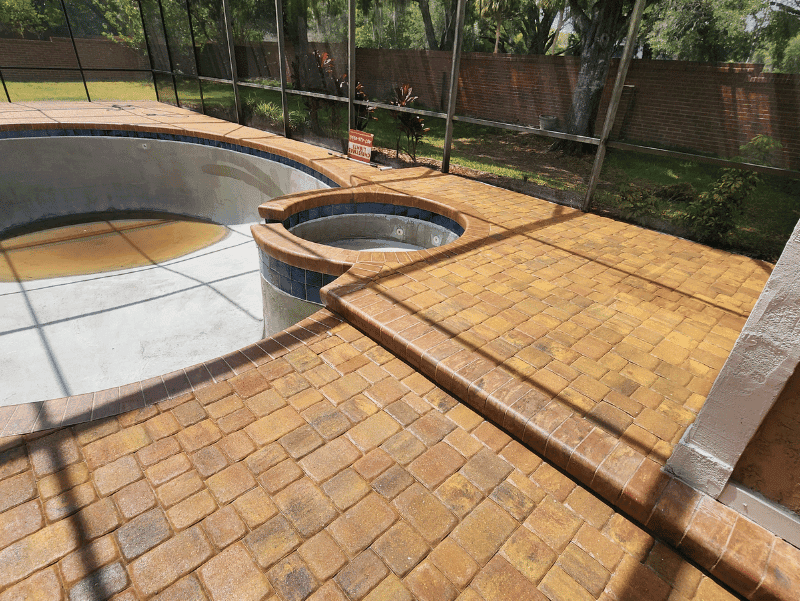
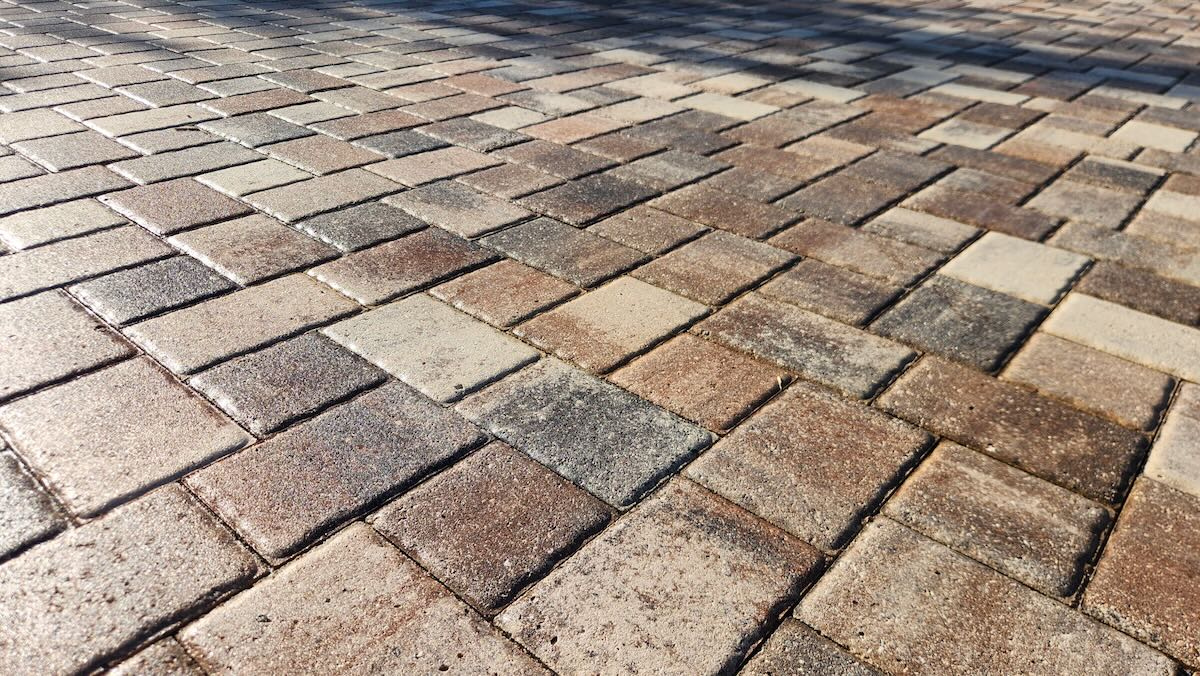
AFTER
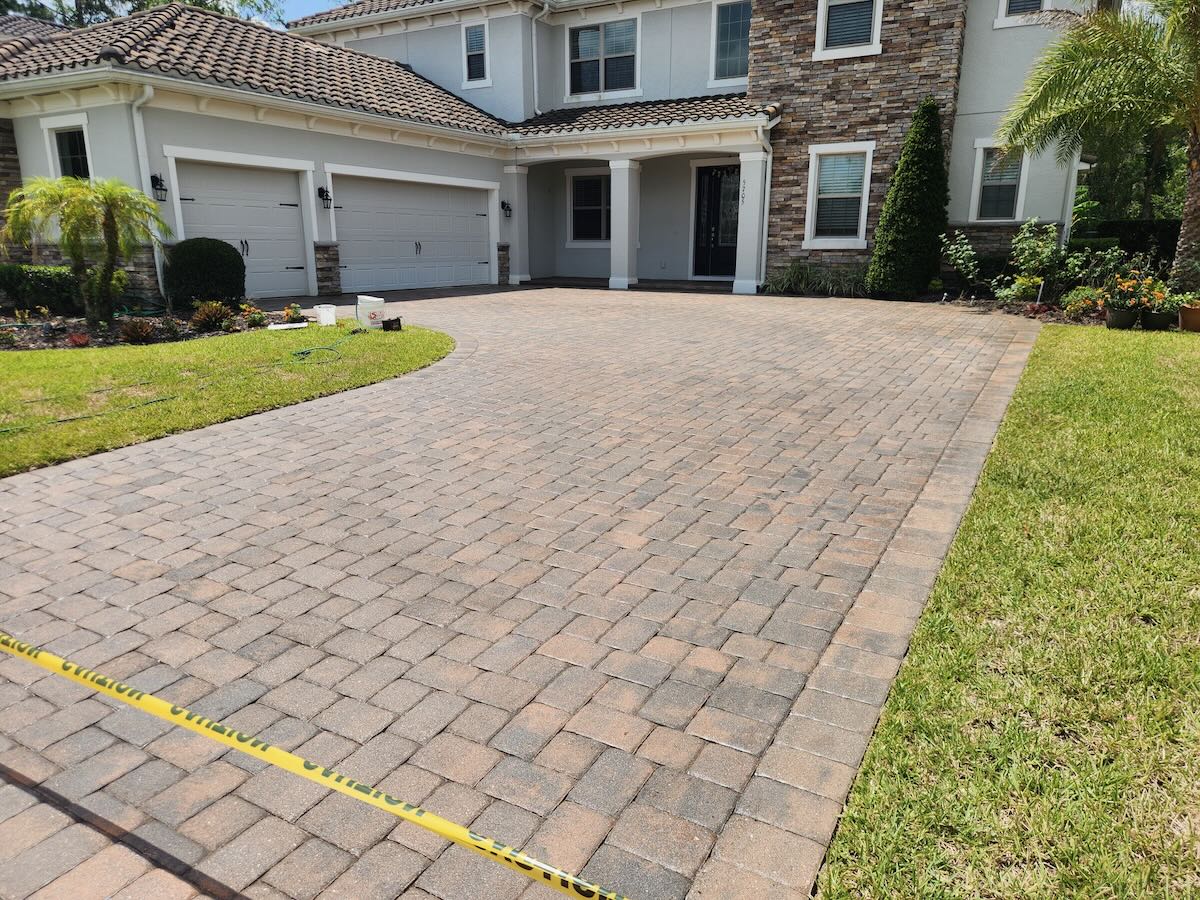
Before and after paver sealer restoration by Castle Clean & Seal — removing white haze and resealing with breathable water-based sealer.
HOW TO FIX WHITE PAVER SEALER (THE RIGHT WAY)
Here's the hard truth: you cannot fix white paver sealer by applying more sealer on top. If you seal over a failed sealer, you're just trapping the problem under another layer — and the white haze will come back worse than before, guaranteed. The only real fix requires removing the failed sealer first.
For Trapped Moisture / Solvent-Based Failure
The failed sealer must be chemically stripped from the paver surface using a professional-grade sealer stripper. This involves applying the stripping agent, letting it break down the sealer's bond with the paver, and then removing the dissolved sealer with pressure washing and surface cleaning equipment. Once all the old sealer is removed, the pavers need to dry completely before new sealer is applied.
This is not a DIY-friendly process. The stripping chemicals are harsh, the technique matters (too much pressure can damage pavers, too little won't remove the sealer), and if any old sealer is left behind, the new application will fail in those spots. Around pool decks, the chemicals also need to be kept out of the pool water, which requires careful containment.
After stripping, the pavers should be resealed with a breathable, water-based sealer designed for Florida's climate. This is a one-time transition — once you're on water-based sealer, you'll never need to strip again because water-based products wear away gradually rather than failing catastrophically.
For Efflorescence
If the white deposit is efflorescence on unsealed pavers, it will often resolve on its own over time as rain and foot traffic gradually wash the salt deposits away. For faster results, a specialized efflorescence cleaner (typically acid-based) can dissolve the calcium carbonate deposits. The pavers should then be rinsed thoroughly and allowed to dry before sealing.
If efflorescence is trapped under existing sealer, the sealer needs to be stripped first, the efflorescence cleaned and removed, and then the pavers can be resealed once everything is clean and dry. This is why we always recommend waiting at least 60–90 days after new paver installation before sealing — it gives the majority of efflorescence time to work itself out naturally.
For Improper Application
If the hazing is caused by over-application or poor technique, the solution depends on severity. In mild cases, a professional may be able to apply a solvent like xylene to the surface, which temporarily re-emulsifies the sealer and allows trapped moisture to escape. This can sometimes restore clarity without a full strip. In more severe cases, full stripping and resealing is the only reliable fix.
For Incompatible Layering
When incompatible sealers have been layered, all sealer must be stripped down to the bare paver surface. Both the failed top layer and the original base layer need to come off completely. Once stripped to bare paver, the surface can be resealed with a single, appropriate product.
HOW CASTLE CLEAN & SEAL PREVENTS WHITE SEALER IN THE FIRST PLACE
At Castle Clean & Seal, we've completed over 1,135 paver restoration projects across Volusia, Seminole, and Orange Counties — and roughly 20% of those involve correcting failed sealer from other companies. We've seen every version of the white haze problem, and we've built our entire process to prevent it.
We exclusively use water-based sealer made for Florida. Our premium water-based sealer was manufactured specifically for Florida's humid, wet climate. It creates a breathable film that allows moisture to pass through rather than getting trapped underneath. This eliminates the number one cause of white paver sealer in our climate. It's also waterproof on contact, which means even if rain hits after application, it won't damage the job.
We test before we seal. On every project, we check for existing sealer type (water-based vs solvent-based) before applying anything new. If there's an incompatible old sealer on the surface, we address it before moving forward — not after. We also moisture-test the surface to make sure pavers are ready for sealer application.
We follow the Castle Shield 4-Step System. Our process — weed and mold treatment, pressure cleaning, joint stabilizing sand installation, and multi-coat sealer application — is designed as a complete system where every step supports the next. The thorough cleaning ensures proper adhesion. The joint stabilizing sand fills gaps to prevent moisture intrusion. And the sealer locks everything in with a breathable barrier that works with Florida's climate.
We never rush the process. If pavers need more drying time, we wait. If weather conditions aren't right, we reschedule the sealer application rather than risking a bad result. We'd rather split a project across two days and get it right than rush through a single day and risk the white haze that ruins other companies' work.
We stand behind every project. Our warranties range from 18 to 30 months depending on the service package. If anything goes wrong with the sealer — including any hazing or discoloration — we come back and make it right at no extra charge. That's a promise we can make because we trust our products and our process.
💡 Castle Pro Tip
Before hiring any paver sealing company, ask two questions: "What type of sealer do you use?" and "How do you handle Florida's humidity?" If they use solvent-based sealer or can't explain how their product breathes in high humidity, your pavers are at risk of turning white. A company that uses water-based sealer designed for Florida and can explain why — that's who you want on your property.
WHEN TO CALL A PROFESSIONAL VS DIY
If your paver sealer has turned white, you might be tempted to try fixing it yourself. Here's an honest assessment of when DIY can work and when you need professional help.
DIY might work if: The white deposit is efflorescence on unsealed pavers — a stiff broom, water, and possibly a store-bought efflorescence cleaner may resolve it. Or if the hazing is very mild and limited to a small area, you could try applying xylene to see if it clears the trapped moisture.
Call a professional if: The white haze covers most or all of your sealed surface, the sealer is peeling or flaking along with the hazing, your pavers are around a pool (stripping chemicals require careful handling near pool water), or you've already tried to fix it yourself and it's gotten worse. Professional stripping and resealing typically costs $500–$1,000+ more than a standard clean-and-seal job, but it's the only reliable fix for widespread sealer failure.
At Castle Clean & Seal, we offer free same-day quotes that include an honest assessment of what's happening with your pavers and what it will take to fix them. If your pavers don't actually need a full strip — if the issue is something simpler — we'll tell you that too. We'd rather earn your trust with honesty than sell you work you don't need.
If your paver sealer has turned white and you want it fixed the right way, request your free same-day quote or call us at (386) 215-5461. We serve homeowners across Deltona, Daytona Beach, Orlando, Sanford, Lake Mary, Port Orange, Ormond Beach, and 60+ other cities throughout Volusia, Seminole, and Orange Counties.
Why did my paver sealer turn white?
Can you fix white paver sealer without stripping it?
How much does it cost to fix white paver sealer in Florida?
How do I prevent paver sealer from turning white?
What is the difference between efflorescence and sealer failure?
READY TO PROTECT YOUR INVESTMENT?
GET YOUR FREE SAME-DAY
QUOTE
Join 1,135+ happy Central Florida homeowners. Licensed & insured.
Takes 30 seconds · Same-day response · No obligation