Paver Sealing Tips
What to look for, what to ask, and how to avoid costly mistakes when hiring a paver sealing contractor in Volusia, Seminole, or Orange County

Chance Sixma
🗓️
May 12, 2026
📖
8 min read
🔄
Updated -
May 12, 2026
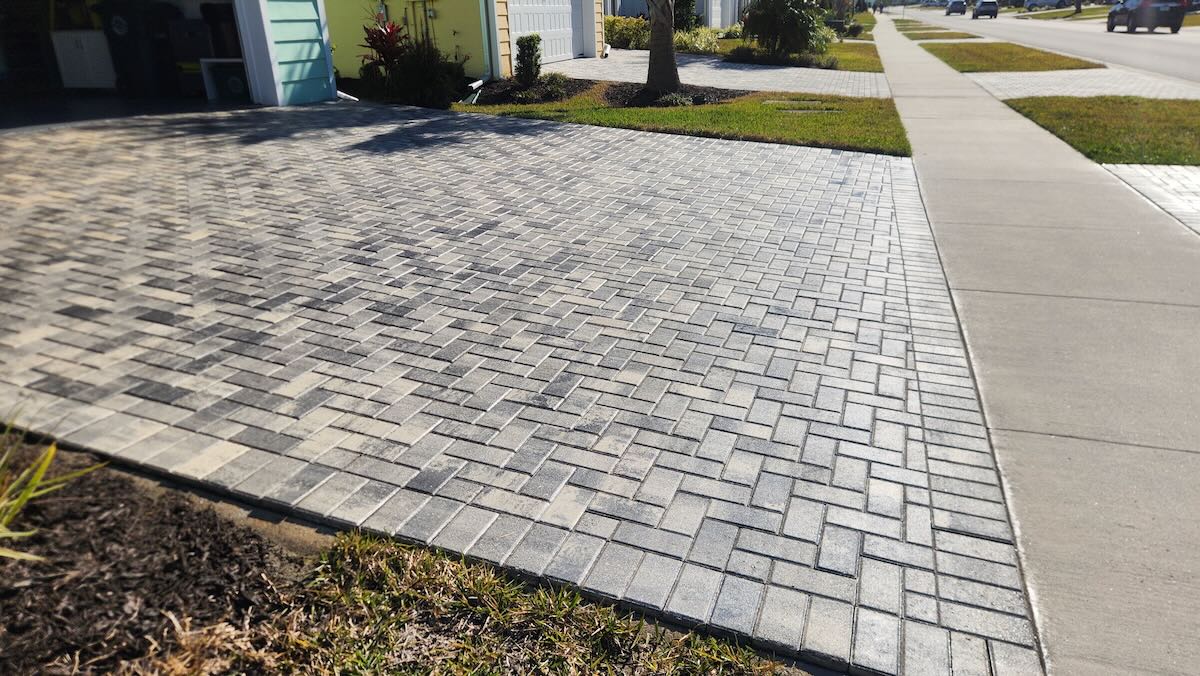
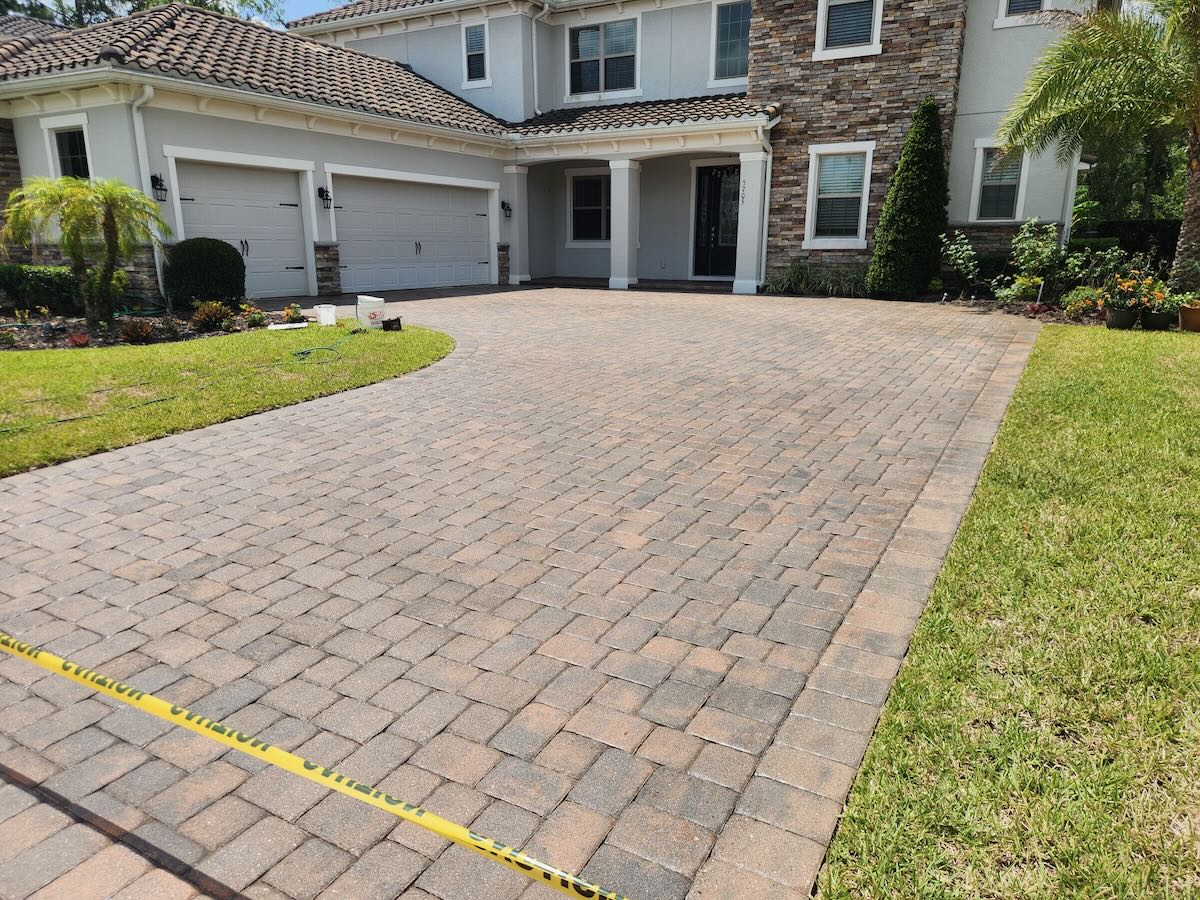
A finished paver driveway shows what to look for when comparing local cleaning and sealing companies.
Key Takeaway
The biggest mistake homeowners make when hiring a paver sealing company is focusing on price per square foot instead of what the contractor actually does before the sealer goes down. In Central Florida's humid climate, preparation — cleaning, mold treatment, joint stabilization, and sealer selection — determines whether your results last 6 months or 3 years.
What You're Really Paying For When You Hire a Paver Company
If you've searched for paver cleaning and sealing companies near you, you've probably noticed the quotes can vary a lot — sometimes by hundreds or even thousands of dollars for the same square footage. That gap usually comes down to one thing: how much prep work the contractor does before the sealer touches your pavers.
In Central Florida — across Volusia, Seminole, and Orange Counties — pavers take a beating. Heavy rain from June through September, high humidity year-round, intense UV exposure, and irrigation systems running constantly all create conditions that encourage mold, algae, efflorescence, and joint erosion. Slapping a coat of sealer over a surface that hasn't been properly cleaned and stabilized is a shortcut that typically fails within a season.
Here's what a thorough paver sealing process should include:
Step 1 — Treat the problem at the source. Mold, algae, mildew, and weeds should be treated with a biodegradable algaecide before any cleaning begins. Pressure washing alone does not kill mold spores. If a contractor skips this step, mold will return faster than it should.
Step 2 — Deep clean without blasting your joints apart. A high-volume, low-pressure cleaning system is more effective than a standard pressure washer for pavers. High-pressure wands can erode joint sand, shift pavers, and etch softer stone surfaces like travertine. If a contractor shows up with a standard residential pressure washer and a single wand, ask questions.
Step 3 — Re-sand the joints. Joint-stabilizing sand is what holds pavers in place, keeps weeds from rooting between gaps, and prevents insect and ant tunneling. After cleaning, the joints are partially depleted and need to be refilled and compacted before sealing. Skipping this step leaves your pavers structurally weaker and makes weed control much harder.
Step 4 — Apply the right sealer in the right conditions. Two to three coats of a premium water-based sealer is the standard for Florida conditions. We'll get into sealer types in the next section, but the short version is: not every sealer is appropriate for Florida's climate, and how it's applied matters as much as what it is.
Travertine Is Not the Same as Concrete Pavers — Make Sure Your Contractor Knows That
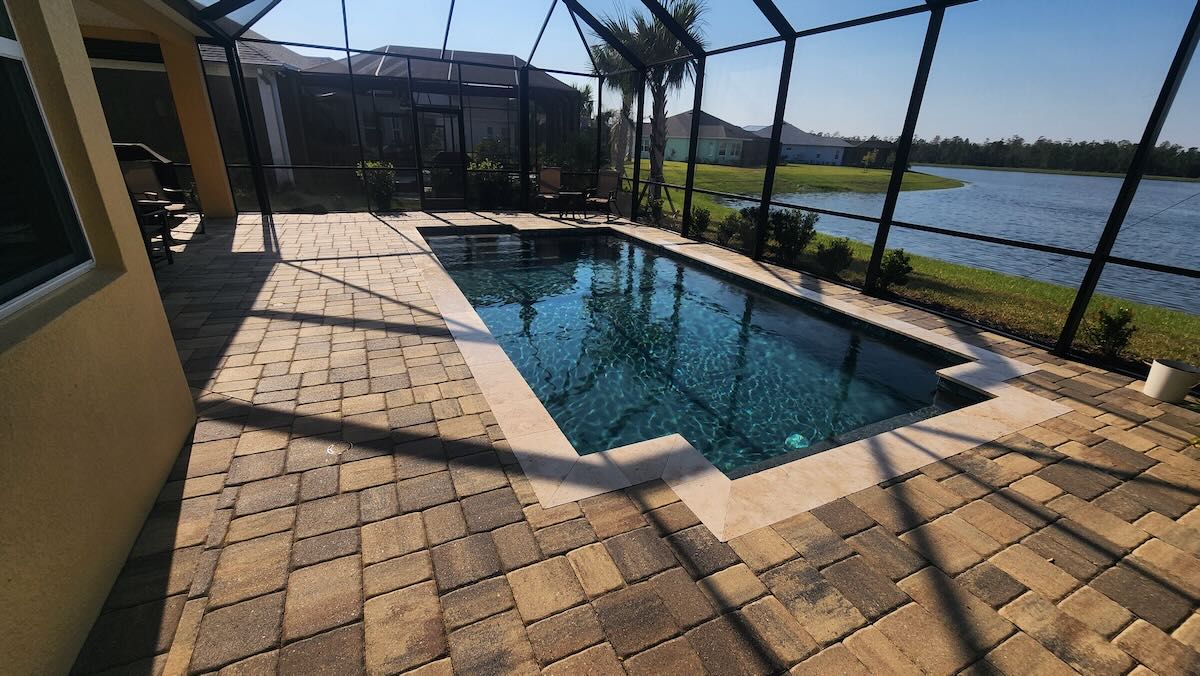
If you have travertine pavers on your pool deck, patio, or driveway, the sealing approach is different from standard concrete or clay brick pavers. Travertine is a natural stone with a porous, open structure. It needs a penetrating travertine sealer — also called an impregnating sealer — that absorbs into the stone rather than sitting on top of it.
A film-forming sealer applied to travertine can trap moisture inside the stone, peel, and look cloudy within months in Florida's climate. Before you hire anyone for travertine sealing near you, ask directly: do you use a penetrating sealer for travertine, or a topical film-forming product?
A qualified contractor will know the difference immediately and be able to explain why a penetrating sealer protects travertine without altering its natural look or trapping moisture.
Travertine floor restoration near you may also involve filling the natural voids (called pits or holes) in the surface before sealing. Some homeowners want those filled for a smoother, easier-to-clean surface. Others prefer to keep the natural texture. Make sure you discuss this with the contractor before work begins — it changes the scope and the process.
Water-Based vs. Solvent-Based Sealer: Why It Matters in Florida
This is one of the most important questions to ask any paver sealing company. Florida's humidity, rainfall, and temperature swings make solvent-based sealers risky on most residential surfaces.
Solvent-based sealers create a nearly airtight film on the surface. When moisture from rain, irrigation, ground vapor, or condensation gets underneath that film — and in Florida it will — it has nowhere to go. The result is white haze, blushing, or a milky cloudy appearance that homeowners often call "white spots on pavers after sealing" or describe as pavers turning white after sealing. Reversing that kind of failure usually means stripping the entire coating, which costs more than the original seal job.
Water-based sealers are breathable. They allow moisture vapor to escape through the sealer film rather than trapping it underneath. That makes them better suited for Florida's year-round humidity, frequent rain, and irrigation schedules.
If a contractor recommends a solvent-based sealer for your driveway or pool deck without explaining why it's appropriate for your specific situation, that's worth a follow-up question. Learn more about the differences between water-based and solvent-based paver sealers for Florida conditions.
How Long Does a Driveway Seal Take to Dry?
This is one of the most common questions homeowners ask, and the honest answer is: it depends on the product, the weather, and how many coats were applied.
For a water-based sealer applied in Central Florida conditions:
Initial cure: Most water-based sealers are dry to light foot traffic within 4 to 6 hours under normal conditions (low humidity, no rain, temperatures above 50°F).
Vehicle traffic: Most contractors recommend waiting 24 hours before driving on a freshly sealed driveway.
Full cure: Complete hardening and maximum protection typically takes 48 to 72 hours. Avoiding heavy rain during this window gives the best results.
Florida's afternoon thunderstorms can complicate this during the wet season (June through September). A reputable contractor will check the forecast before scheduling your job and will not apply sealer if rain is expected within the curing window. The dry season — roughly October through May — is generally the easiest time to plan a sealing project, with February through April being the most predictable weather window.
If a contractor can't give you a clear answer about drying time or says it doesn't matter, that's a sign they may not understand the product they're applying.
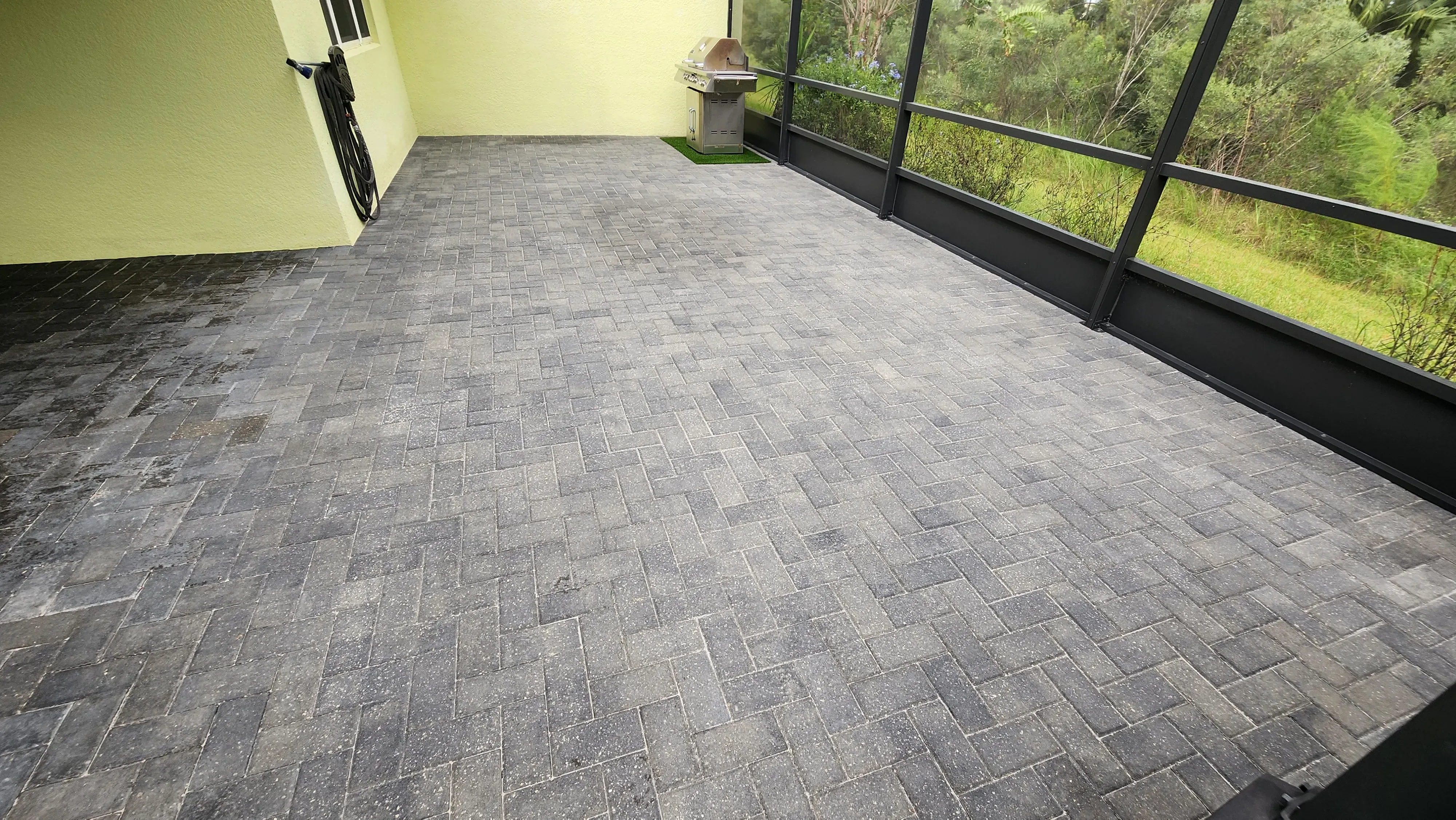
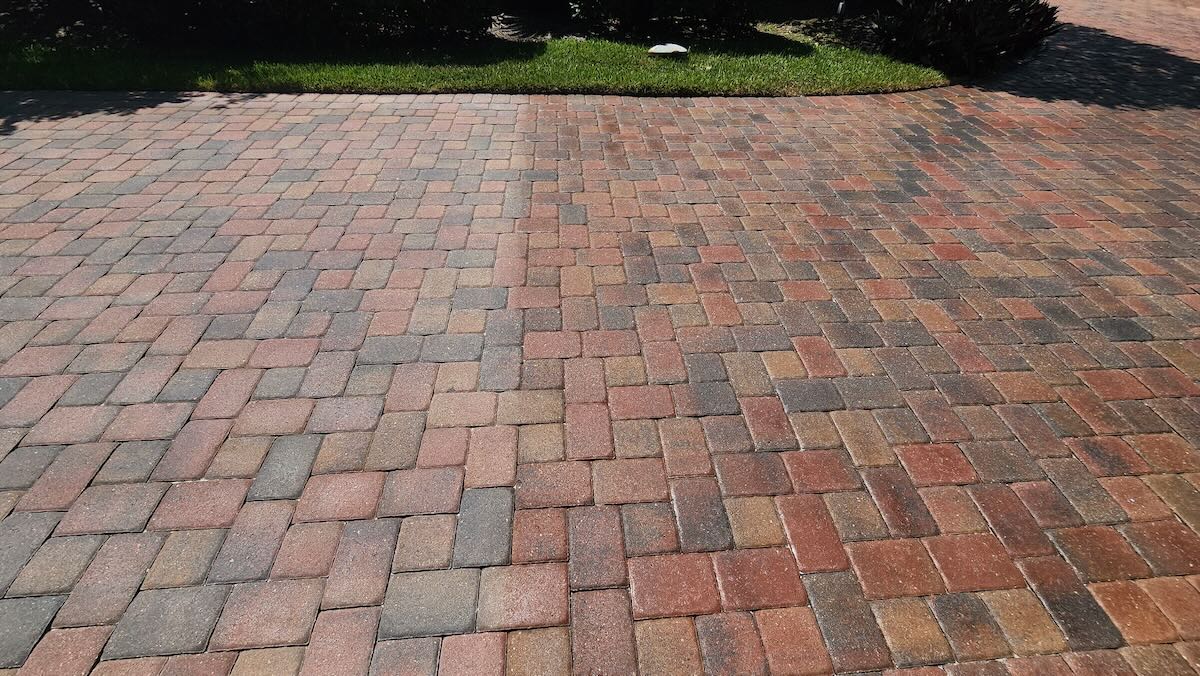
BEFORE
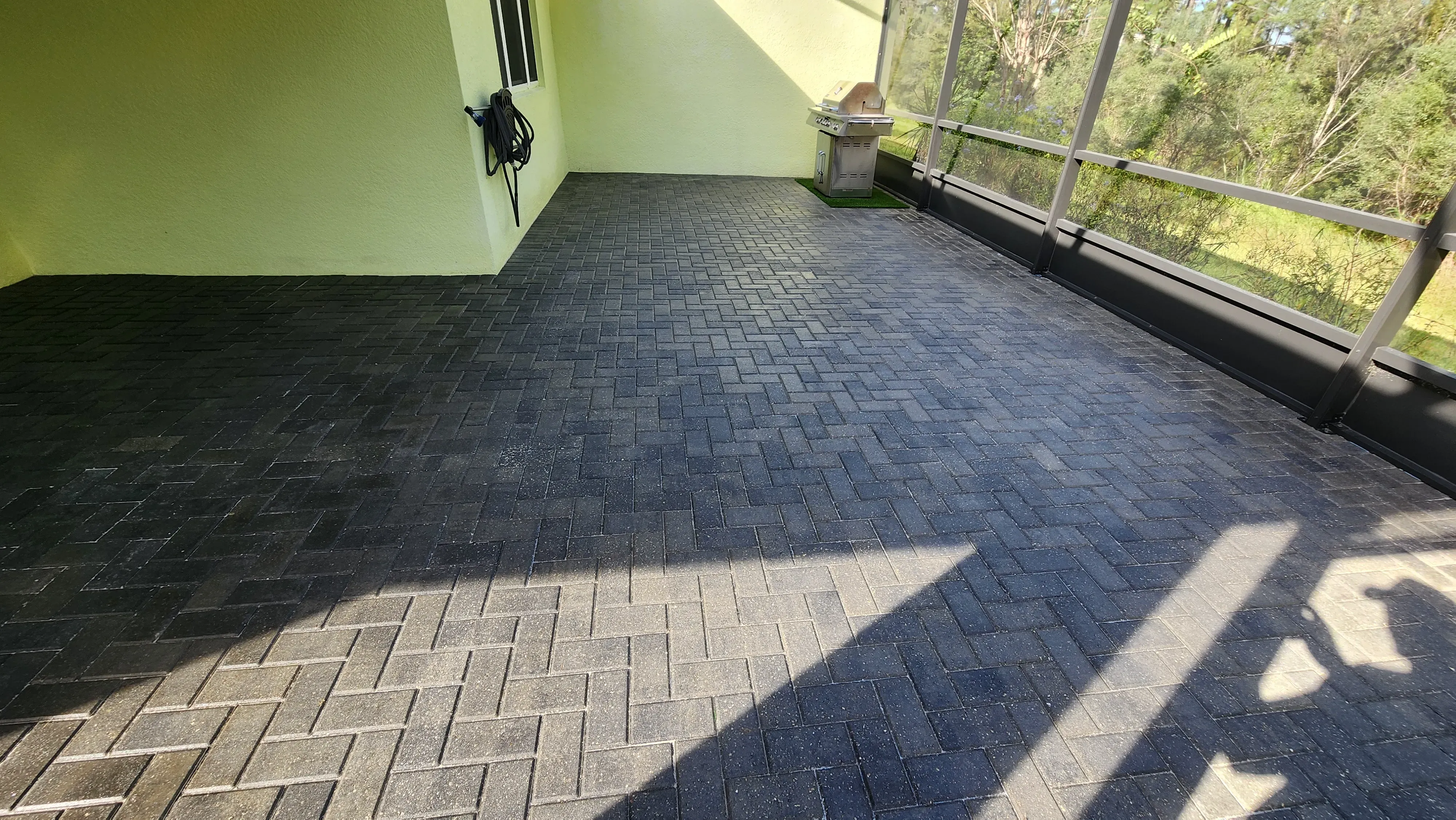
AFTER
Before and after a Castle Shield 4-step clean, stabilize, and seal on a Central Florida paver driveway. The difference comes from prep work — not just the sealer.
Questions to Ask Before You Hire Anyone
Here's a practical checklist you can use when getting quotes from paver cleaning and sealing companies near you in Central Florida.
1. What does your cleaning process include?
Look for: mold/algae treatment before cleaning, low-pressure or soft-wash equipment, and a process for clearing joints before re-sanding.
2. Do you re-sand the joints after cleaning?
This is non-negotiable for concrete pavers. Joint-stabilizing sand holds the paver field together and is the first line of defense against weeds and ant hills. If the answer is no, ask why.
3. What type of sealer do you use, and is it water-based or solvent-based?
For most Florida surfaces, water-based is the safer choice. If they recommend solvent-based, ask what their reasoning is for your specific surface and climate conditions.
4. How many coats do you apply?
Two to three coats is standard for proper protection. One thin coat is a shortcut.
5. What are the drying and curing requirements after sealing?
A knowledgeable contractor should be able to tell you when you can walk on it, when you can drive on it, and when you should avoid rain or irrigation.
6. Are you licensed and insured?
This protects you if something goes wrong — a shifted paver, surface damage, or a slip-and-fall during the job. Always verify.
7. Do you have local reviews I can look at?
Volusia, Seminole, and Orange County homeowners who've had the same Central Florida conditions as you are the best reference. Look for reviews that mention specific cities, surface types, and results over time — not just "great job."
What to Watch Out For: Red Flags When Getting Quotes
Not every low bid is a bad deal, but some warning signs are worth paying attention to:
No site visit or measurement before quoting. Paver sealing is priced per square foot based on surface area, condition, and prep required. A quote given over the phone without seeing the surface is a guess at best.
Pressure to decide on the spot. A professional contractor doesn't need to pressure you. Get at least two to three quotes.
No mention of joint sand. If the contractor's proposal says "clean and seal" without any reference to joint stabilization, ask whether it's included.
Recommending you seal over white haze or efflorescence. Sealing over existing coating failures or active mineral deposits will lock the problem in, not fix it. The right answer is to strip, diagnose, and reseal properly. See what causes white haze after sealing and how it's fixed.
Unusually fast turnaround promises. A proper clean-and-seal on a standard driveway takes most of a day. If someone quotes you a two-hour job for 1,500 square feet, ask what's being skipped.
What Does Paver Sealing Cost in Central Florida?
Professional paver sealing in Central Florida typically ranges from $1.50 to $3.00 per square foot in 2026. Most residential projects — a driveway, patio, or pool deck — land somewhere between $1,000 and $3,000 depending on size, surface type, and the amount of prep work required.
Travertine sealing near you may run toward the higher end of that range because of the specialized product and technique required. Jobs that involve stripping failed sealer before resealing will also cost more than a standard clean-and-seal because of the additional labor and chemical stripping process involved.
The lowest quote is rarely the best value if it means skipping steps that determine how long the results last. Get a more detailed breakdown of paver sealing costs in Central Florida.
Serving Volusia, Seminole, and Orange Counties
Castle Clean and Seal is based in Deltona and serves homeowners across Central Florida including Daytona Beach, Port Orange, Ormond Beach, New Smyrna Beach, DeLand, DeBary, Sanford, Lake Mary, Oviedo, Winter Springs, Orlando, Winter Park, Apopka, Windermere, and surrounding areas.
With 1,135+ projects completed, 250+ five-star reviews, and 15+ years of experience working specifically in Florida's climate, our team understands what it takes to get results that hold up through the wet season, the UV exposure, and the year-round humidity that makes Central Florida a harder environment for hardscape surfaces than most of the country.
If you're looking for paver sanding near you, travertine sealing near you, or a full paver restoration in Volusia, Seminole, or Orange County, call us at (386) 215-5461 or request a free quote online. We'll measure the surface, assess the condition, and give you a clear picture of what the job actually involves before you commit to anything.
Find out the best time of year to seal pavers in Central Florida.
How do I know if a paver sealing company is doing the job right?
What is paver sanding, and why does it matter?
How long does a sealed driveway need to dry before I can use it?
Can travertine pavers be sealed the same way as concrete pavers?
Why does my driveway look white or cloudy after being sealed?
READY TO PROTECT YOUR INVESTMENT?
GET YOUR FREE SAME-DAY
QUOTE
Join 1,135+ happy Central Florida homeowners. Licensed & insured.
Takes 30 seconds · Same-day response · No obligation