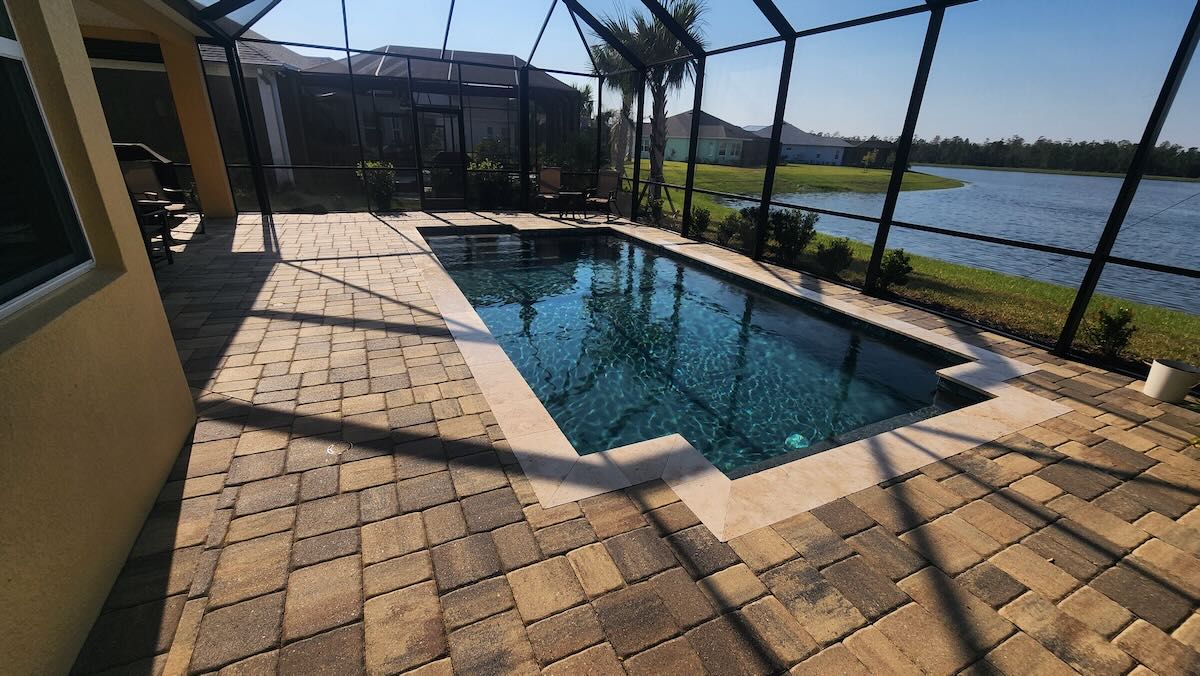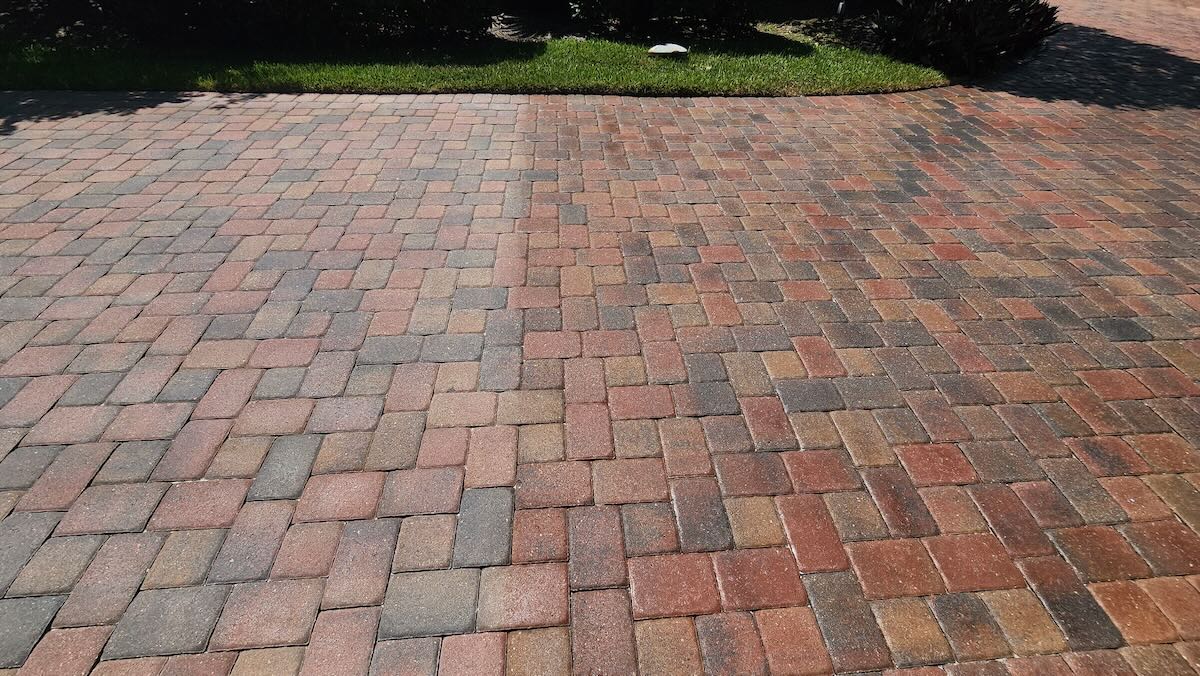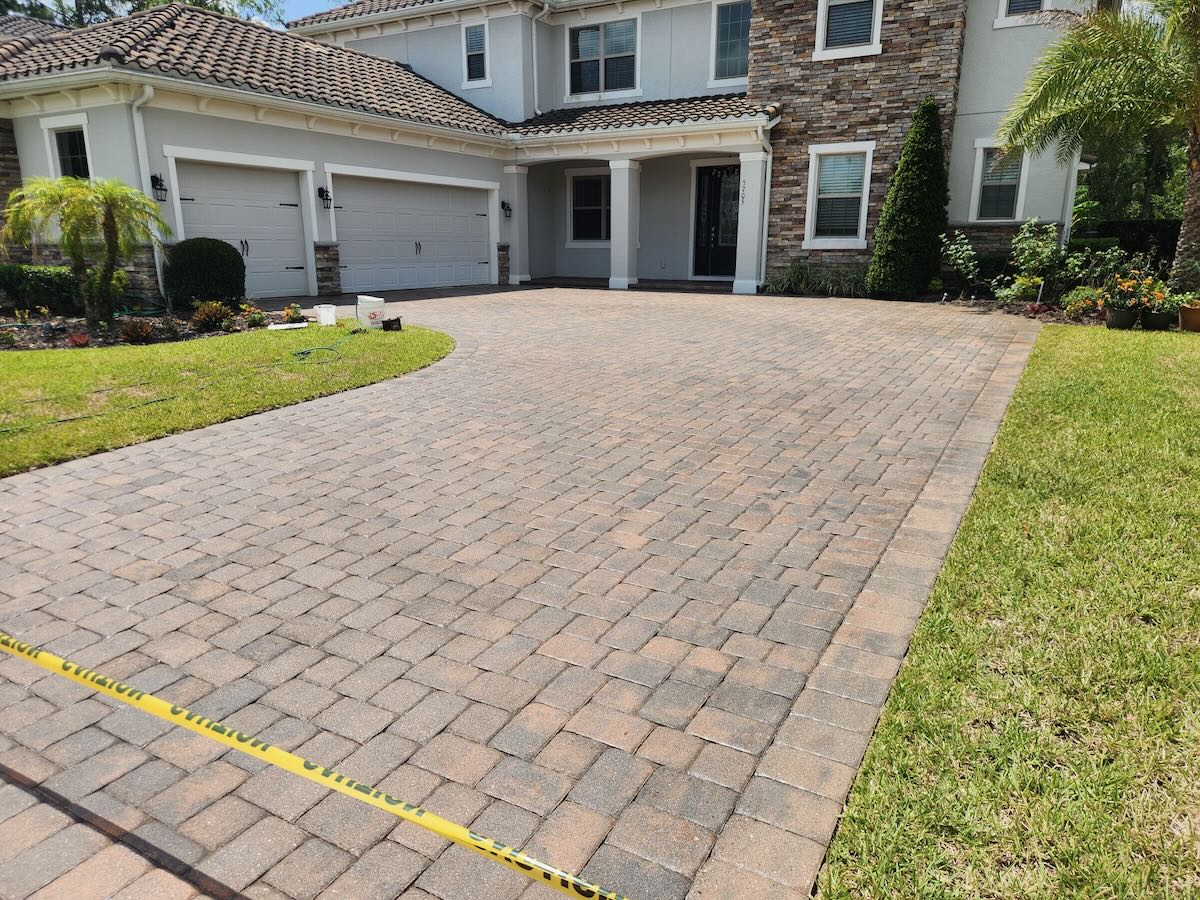

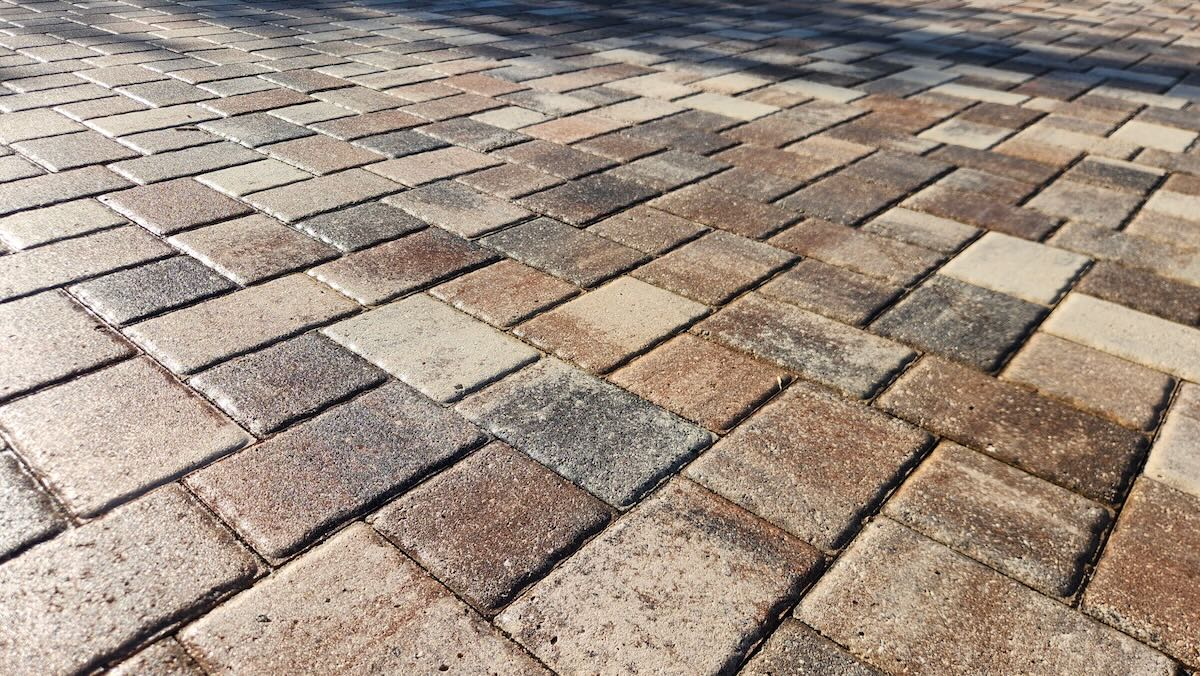
Stabilizing sand helps lock paver joints in place before the surface is sealed.
Key Takeaway
Joint-stabilizing sand locks paver joints to prevent shifting, weed growth, and erosion. In Central Florida's wet climate, skipping this step before sealing leads to faster paver degradation. A complete professional process treats, cleans, stabilizes joints, and then seals — in that order.
What Is Stabilizing Sand?
Stabilizing sand — also called joint-stabilizing sand — is a specially formulated material that fills the gaps between pavers. Unlike ordinary play sand or masonry sand, joint-stabilizing sand contains binding agents that harden when activated with water. Once cured, the sand becomes firm enough to resist erosion, ant tunneling, and the constant wash-out from Florida’s heavy afternoon rain.
The joints between your pavers are not just filler. They hold each paver in its proper position. When those joints erode, individual pavers start to rock, shift, and sink. Water pools in low spots. Weeds and grass find a path through the surface. Over time, a driveway or patio that looked great when it was installed starts to look like a puzzle with missing pieces.
Why Central Florida Pavers Lose Their Joint Sand
Central Florida is hard on paver joints for several reasons:
Heavy rainfall. The rainy season runs roughly June through September, and daily downpours are the norm. Each storm carries sand out of the joints and into your lawn, driveway apron, or storm drain.
Pressure washing. Routine pressure washing — even professional cleaning done correctly — removes some joint sand. This is expected and normal. It is one reason joint stabilization should follow every cleaning.
Foot and vehicle traffic. Driveways take real punishment. Every vehicle that crosses the surface flexes the paver system slightly. Over years, that flex loosens the joint sand.
Weed roots. Once weeds establish themselves in an open joint, their roots mechanically push the sand out further and hold the gap open for more water infiltration.
Florida ant activity. Fire ants and other ant species common to Central Florida are notorious for tunneling through paver joints and depositing excavated sand on the surface in small mounds.
The result is hollow, open joints that allow your pavers to shift and allow more weeds, water damage, and structural problems over time.
What Happens If You Skip the Stabilizing Sand Step
This is where a lot of low-cost paver sealing jobs fall apart. Some contractors pressure wash a surface, let it dry briefly, and roll straight to the sealer. The joints are left empty or filled with old, loose sand that was never replaced.
When sealer is applied over empty or compromised joints, the sealer may bridge the gaps temporarily. But within a season, the joint continues to erode underneath the sealer film. Pavers shift. The surface becomes uneven. In some cases, the joint movement cracks the sealer, allowing water to penetrate from below — which can cause the sealer to cloud, peel, or blister.
For homeowners in Deltona, DeLand, Daytona Beach, Sanford, or anywhere else across Volusia, Seminole, and Orange Counties, this is a pattern we see regularly when we are called in to fix another company’s work.
The right approach is to always restore joint sand before sealing — not after, not as an optional add-on.
How Castle Clean and Seal Handles Joint Stabilization
At Castle Clean and Seal, joint stabilization is step three of our four-step Castle Shield process. Here is how it flows:
Treat mold, algae, mildew, and weeds with a biodegradable algaecide applied directly to the source.
Deep clean the surface using a high-volume, low-pressure cleaning system that removes contamination without hammering the joints.
Stabilize the paver joints by reinstalling joint-stabilizing sand and compacting it properly.
Seal with two to three coats of a premium water-based sealer designed for Florida’s humid climate.
Joint stabilization fits between cleaning and sealing because the surface needs to be clean before you fill the joints, and the joints need to be filled before the sealer locks everything in place. Do it out of order and you are either sealing over dirty joints or trying to pack sand through a wet sealer coat.
Once the joint sand is properly installed and the sealer is applied, the sealer penetrates the top layer of the sand and helps bind it further. The combination of stabilized joints and a quality sealer significantly slows future sand erosion.
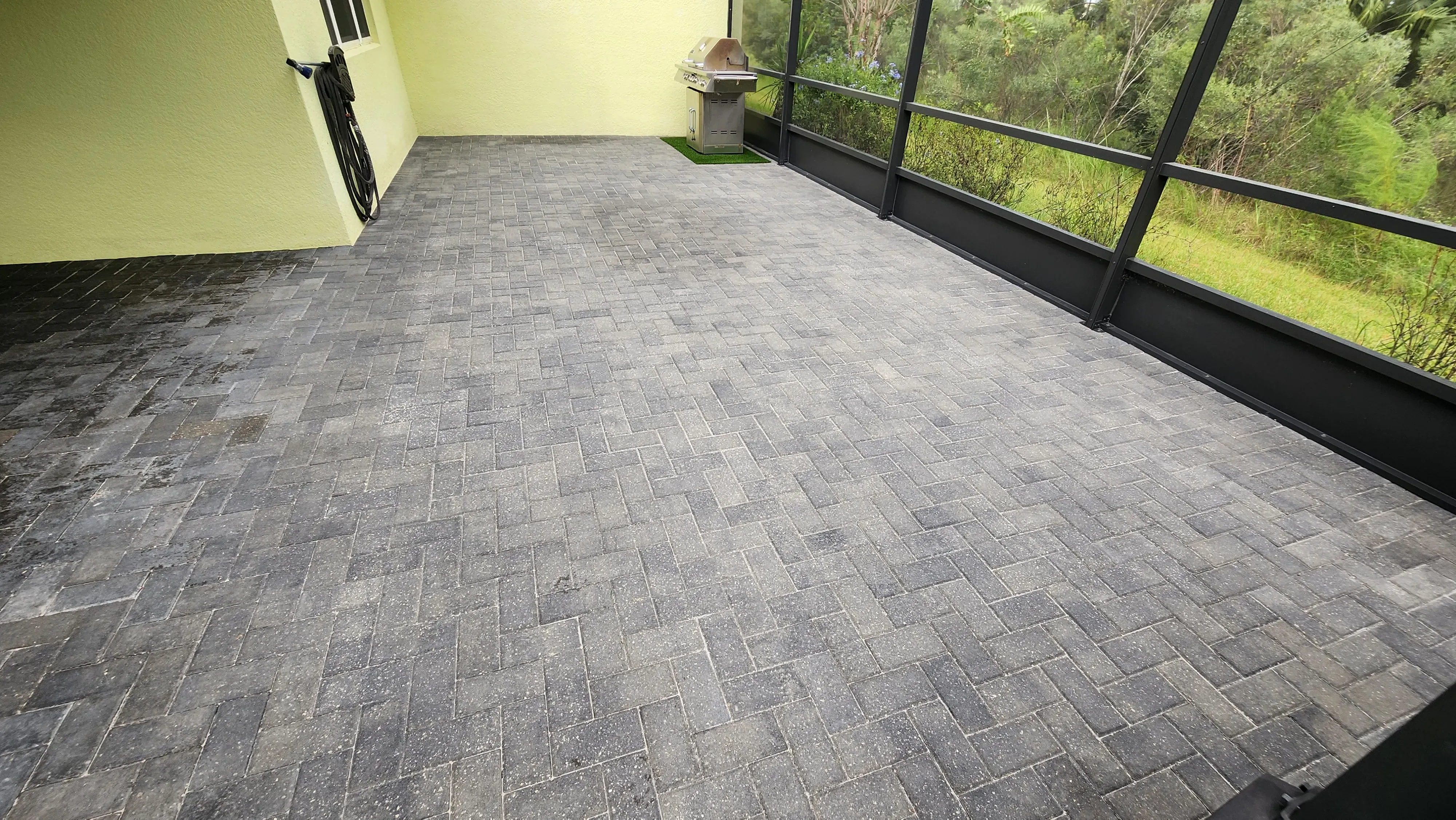
BEFORE
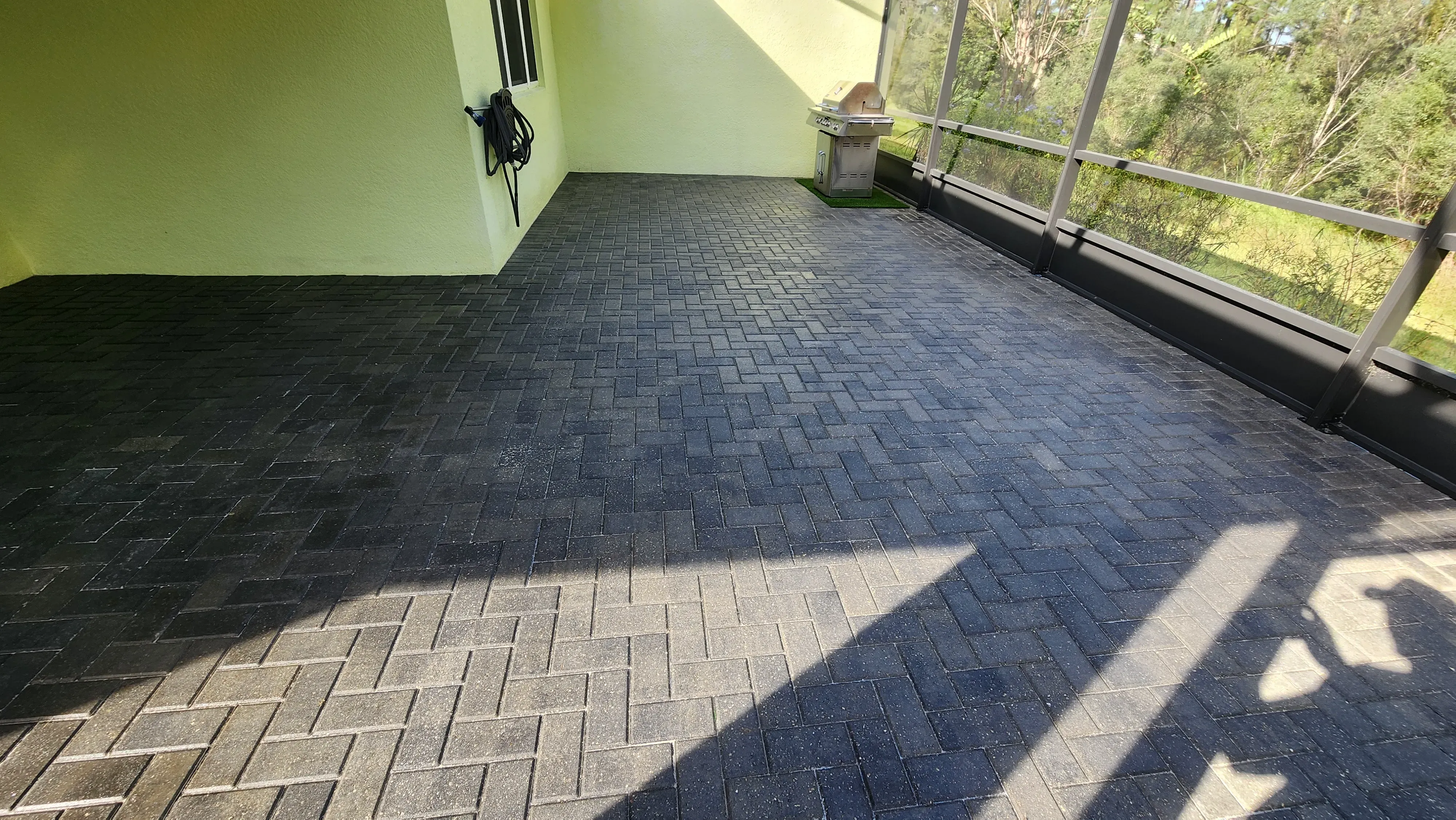
AFTER
Before: open, eroded paver joints with weed growth. After: joints packed with stabilizing sand and sealed with a water-based paver sealer — a typical result from Castle Clean and Seal's Castle Shield process.
How Long Does Sealer Take to Dry After Joint Stabilization?
This is one of the most common questions we get, and it comes up even more often when joint sand is part of the job.
Once the stabilizing sand is packed and leveled, the surface needs to be dry before sealer is applied. We do not rush this step. Sealing over damp pavers — or over joint sand that has not fully dried — is a leading cause of white haze and cloudy sealer in Florida. The moisture becomes trapped under the sealer film and has nowhere to go.
Once the sealer is applied, general dry-time guidance for Central Florida conditions:
Light foot traffic: most water-based sealers allow this within 4 to 6 hours on a dry, sunny day.
Vehicle traffic: typically safe after 24 hours, though some high-humidity days may require more time.
Full cure: 48 to 72 hours of dry weather is ideal before heavy rain or regular use.
This is why weather matters so much. We plan jobs around the forecast and use a water-based sealer that is better suited to Florida's humidity than solvent-based products. A breathable water-based sealer allows moisture vapor to escape the paver system rather than trapping it under an airtight film — which is critical in a state that deals with year-round humidity, irrigation systems, and sudden rainstorms.
If you have ever seen pavers turn white or milky after sealing, that is almost always a moisture problem — and it is almost always preventable with the right product and the right prep.
For more on that topic, see our article on paver sealer turning white in Florida.
Signs Your Paver Joints Need Attention Now
You do not need to be a contractor to spot failing joint sand. Walk your driveway, patio, or pool deck and look for:
Visible gaps between pavers that are wider than a credit card.
Rocking pavers — individual stones that shift when you step on them.
Weed or grass growth pushing up between joints.
Ant mounds sitting directly on the paver surface near the joints.
Sand deposits on your lawn edges or at the low end of your driveway.
Uneven surface where pavers have shifted into different heights.
Any one of these signs means joint sand has eroded enough that it needs to be restored before your next sealing. Sealing over open joints just seals the problem in.
Paver Restore vs. Full Replacement
A common question from homeowners in areas like Daytona Beach, Port Orange, Ormond Beach, and Winter Park is whether failing pavers need to be replaced or just restored. In most cases, restoration is the right call.
Paver restoration — cleaning, re-leveling sunken stones where needed, restabilizing joints, and resealing — is significantly more affordable than full paver replacement. As a general reference, professional paver sealing in Central Florida typically runs from $1.50 to $3.00 per square foot depending on surface size, condition, and the prep required. That is a fraction of the cost of tearing out and reinstalling an entire driveway.
We have restored driveways in Deltona and patios in Lake Mary that homeowners were convinced were beyond help. In most cases, once the mold is treated, the surface is deep cleaned, the joints are stabilized, and the right sealer is applied, the transformation is significant.
For a detailed breakdown of what professional paver sealing costs in this area, see our paver sealing cost guide for Central Florida.
When Is the Best Time to Do This in Central Florida?
The honest answer is: any time you can guarantee at least 24 to 48 hours of dry weather after the job is done.
That said, the dry season — roughly October through May — is the easiest window to work with. February through April is ideal. Rain chances are lower, humidity is more manageable, and sealer cures more predictably.
We still take on projects during the summer rainy season, but we watch the forecast carefully and communicate clearly with homeowners about timing. Rushing a sealing job ahead of a storm front is how sealer fails.
For more timing guidance specific to Central Florida, see our article on the best time to seal pavers in Central Florida.
How to Choose the Right Paver Cleaning and Sealing Company
If you are searching for paver cleaning and sealing companies near you in the Daytona Beach, Orlando, or Sanford area, here are the questions worth asking before you commit:
Do they include joint sand restoration in their process? If joint sand is an optional add-on, ask why.
What sealer do they use, and is it water-based or solvent-based? In Florida, water-based is generally safer and more durable long-term.
How many coats do they apply? One thin coat is rarely enough. Two to three coats on a clean, properly prepared surface is standard for lasting results.
Are they licensed and insured? This protects you if something goes wrong on your property.
Do they have local reviews from homeowners in your area? A company with 250+ five-star reviews from Central Florida homeowners has a track record you can check.
Castle Clean and Seal has completed more than 1,135 projects across Volusia, Seminole, and Orange Counties. We are based in Deltona, licensed, insured, and have been doing this for over 15 years. If your paver joints are eroding, your surface looks dull, or you just want a clear straight answer about what your driveway or patio actually needs — give us a call at (386) 215-5461.
For a deeper look at how water-based and solvent-based sealers compare in Florida conditions, see our article on water-based vs. solvent-based paver sealer in Florida.
What is joint-stabilizing sand and is it different from regular sand?
How long does paver sealer take to dry after joint stabilization?
Can I just refill the joint sand myself without hiring a contractor?
Will stabilizing sand and sealing eliminate weeds permanently?
How often should joint sand be replaced on a Central Florida paver driveway or patio?
READY TO PROTECT YOUR INVESTMENT?
GET YOUR FREE SAME-DAY
QUOTE
Join 1,135+ happy Central Florida homeowners. Licensed & insured.
Takes 30 seconds · Same-day response · No obligation