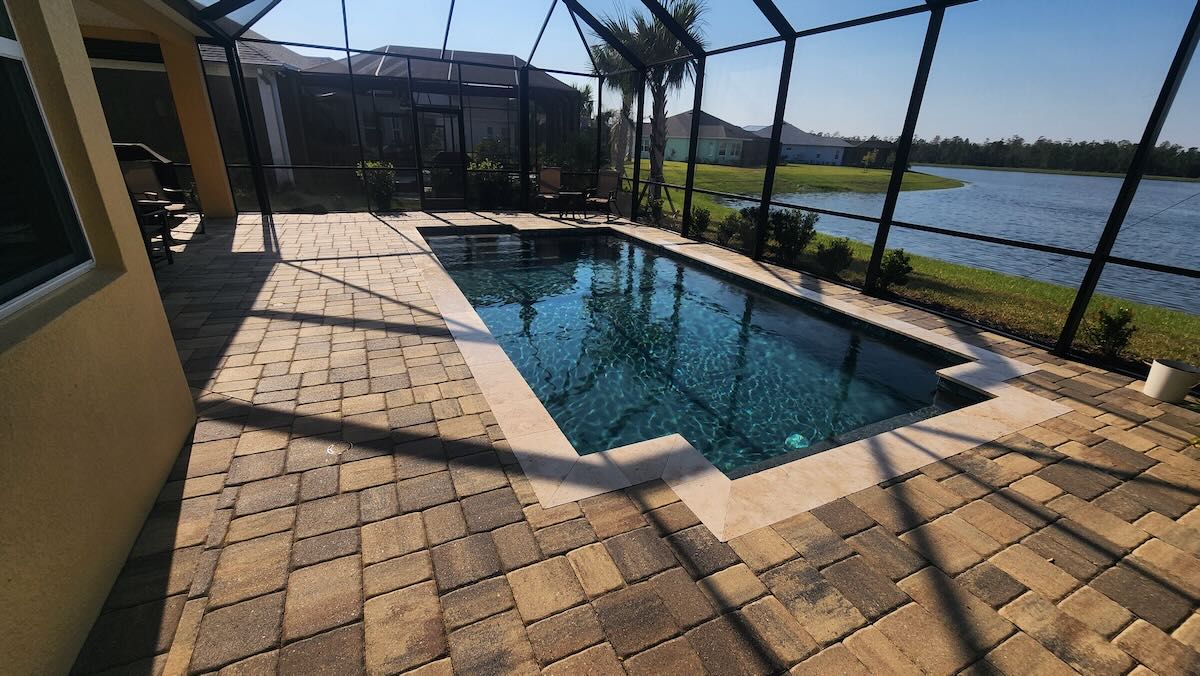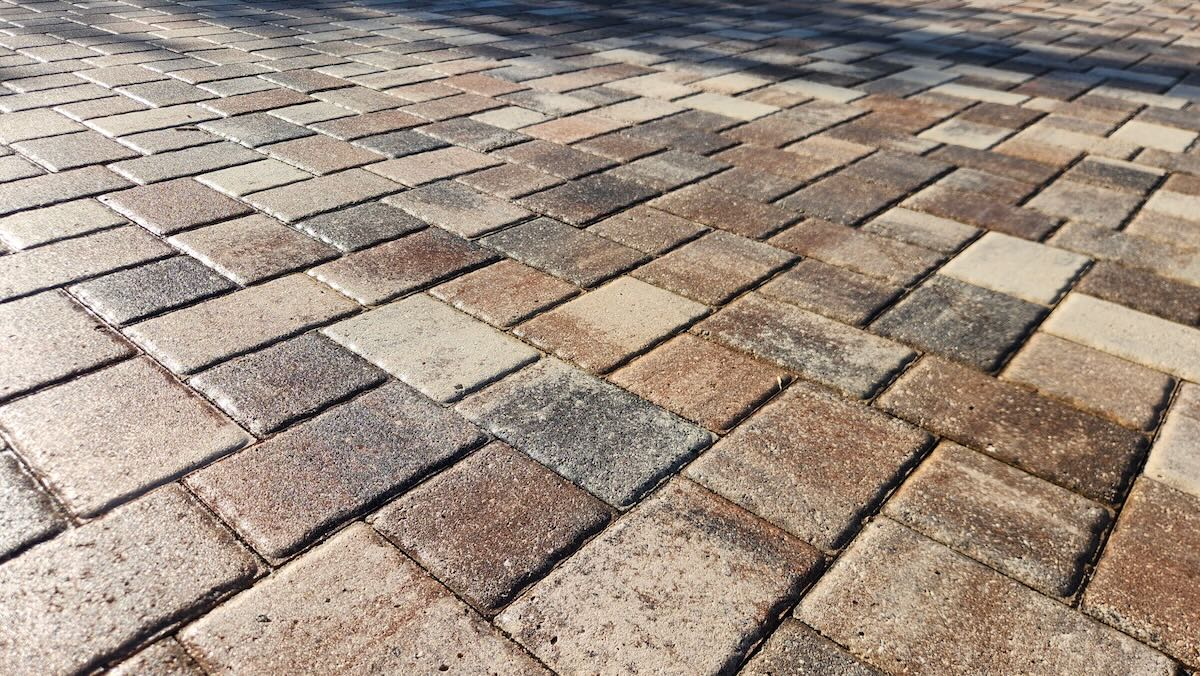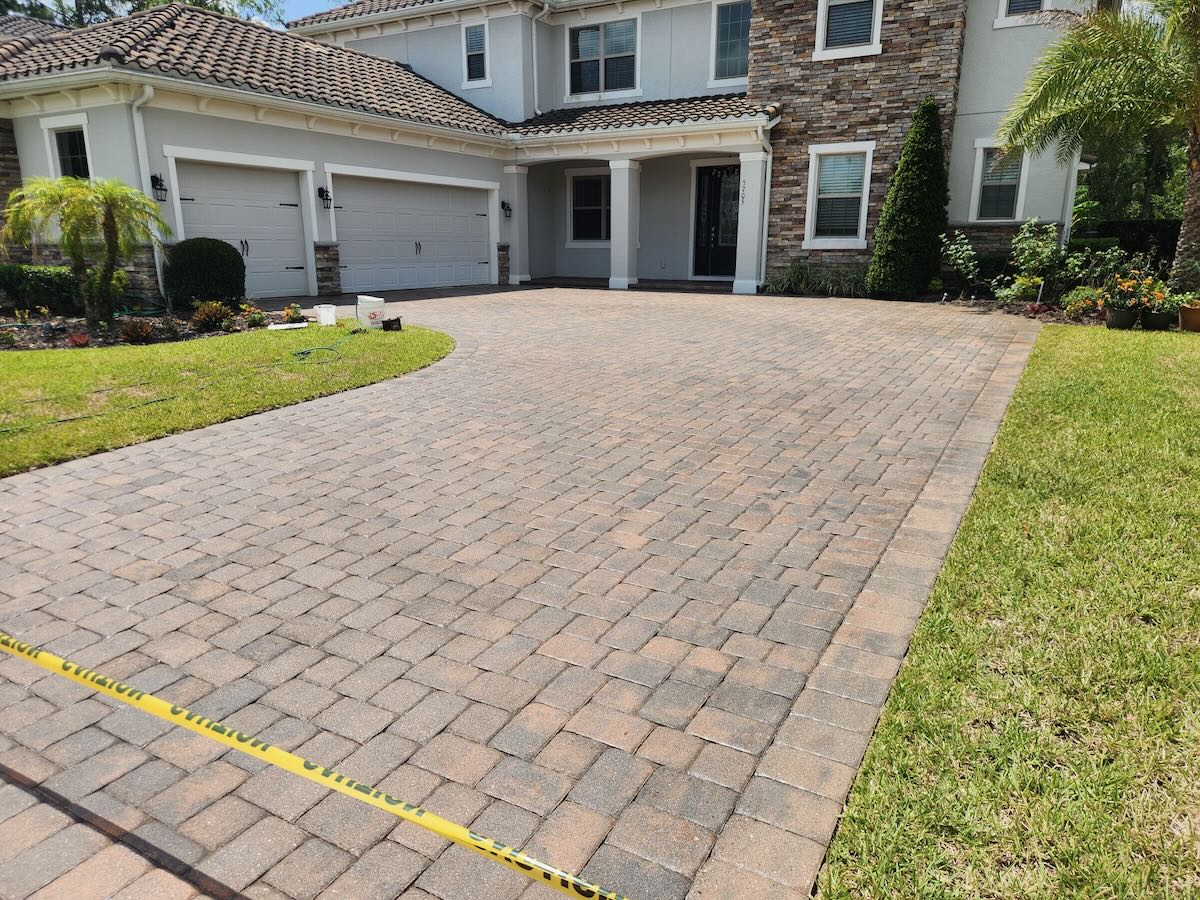

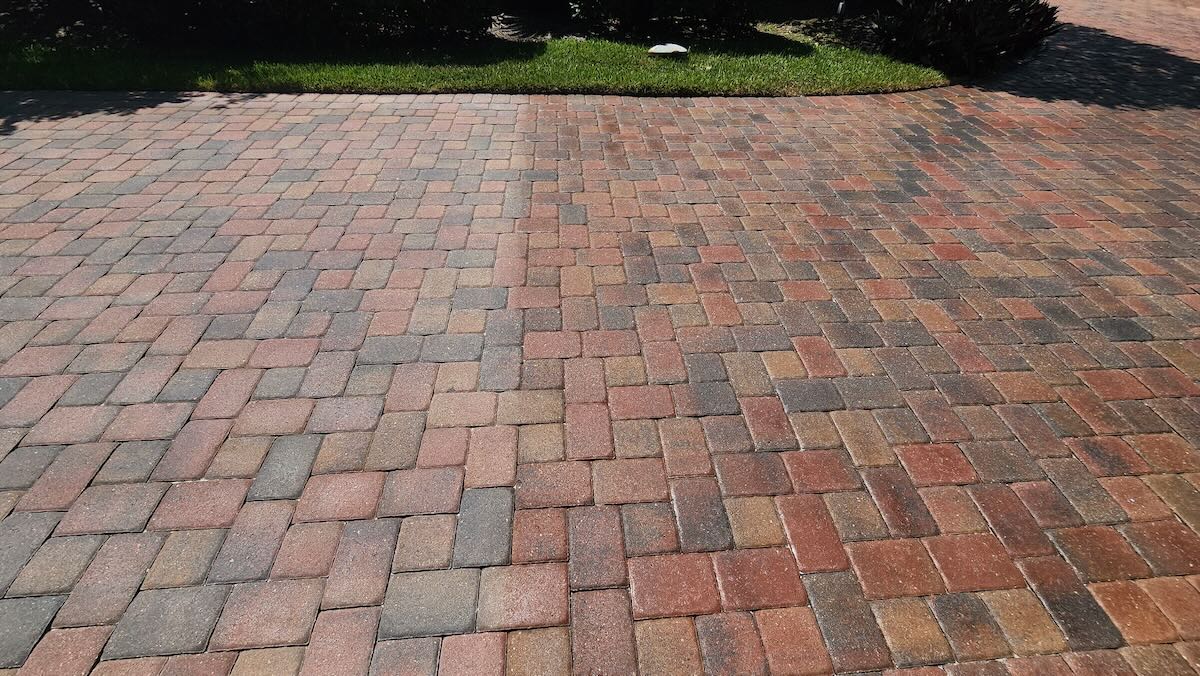
Paver restoration focuses on cleaning, joint stabilization, and sealer application to refresh the surface.
Key Takeaway
Restoring pavers in Florida is a four-step process: treat the biological growth, deep clean the surface, replace the joint sand, and seal with a breathable water-based sealer. Skipping any step shortens the life of the restoration and can lead to white haze, weed regrowth, or failed sealer.
What Does It Mean to Restore Pavers?
Paver restoration is more than pressure washing and spraying on a coat of sealer. A true restore job brings the surface back to a clean, stable, and protected condition that can last several years under Florida conditions.
Most Central Florida homeowners call about paver restoration when they notice one or more of the following:
Pavers are dark, green, or stained from algae, mold, or mildew
Joint sand has washed out and weeds are growing in the gaps
The old sealer is peeling, cloudy, or white
The surface looks worn and the original color has faded
The driveway, patio, or pool deck just looks rough compared to when it was installed
All of these are fixable. The key is doing the steps in the right order.
Step 1: Treat Biological Growth at the Source
Florida's heat and humidity make algae, mold, and mildew a permanent part of outdoor life. If you clean without treating first, the growth comes back faster because the roots are still alive in the paver surface and joints.
A biodegradable algaecide applied before cleaning kills the growth at the source. This step is easy to skip when you're in a hurry, but it makes the cleaning results last significantly longer.
What to watch for: Green or black discoloration on pavers is almost always biological. Orange or rust staining is usually mineral-based. Chalky white deposits are typically efflorescence. Each one calls for a slightly different approach, but the algaecide treatment still comes first for any surface with biological growth.
Step 2: Deep Clean the Surface
Once the algaecide has had time to work, the surface needs a thorough cleaning before anything else happens. This means removing dirt, debris, old biological staining, and any residue from the algaecide treatment.
The goal is to get the pavers as clean as possible without blasting out the joint sand or damaging the surface. High-volume, low-pressure cleaning works better than aggressive pressure washing on most paver types. Too much pressure can pit soft pavers, etch travertine, and blow out all the remaining joint sand in one pass.
Why this matters for sealing: Sealer bonds to the paver surface. If there is dirt, algae residue, or efflorescence sitting on top when you seal, the sealer locks that contamination in place. The result is a hazy, discolored, or short-lived finish.
If the existing sealer is peeling, cloudy, or blistered, it usually needs to be stripped before cleaning and resealing. Sealing over a failed coating just creates a new layer of failure on top of the old one. Learn more about why paver sealer turns white in Florida.
Step 3: Replace the Joint Sand
Joint sand is the material that fills the gaps between pavers. It does three things: it keeps the pavers locked together, it keeps water from undermining the base, and it blocks weed seeds from finding a place to germinate.
In Central Florida, joint sand breaks down over time from rain, irrigation, foot traffic, and cleaning. Once it washes out, weeds move in quickly and the paver surface becomes unstable.
Joint-stabilizing sand is worked into the joints after cleaning and before sealing. The sealer then helps lock the sand in place. This is one of the most overlooked parts of a paver restore job, but it has a significant impact on how long the results last.
Note on weeds: Stabilized joints and sealing will greatly reduce weed growth, but no process can guarantee weeds will never come back in Florida's climate. What you can expect is much less growth and much easier removal when weeds do appear.
Step 4: Seal with the Right Product
Choosing the right sealer for Florida conditions is one of the most important decisions in a paver restore project.
Water-Based vs. Solvent-Based Sealer
This topic comes up on almost every project. The short version: water-based sealer is the better choice for most Central Florida surfaces.
Florida has humidity, frequent rain, irrigation systems, and high ground moisture. Solvent-based sealers create an airtight film that traps moisture vapor trying to escape through the pavers. That trapped moisture turns into white haze, blushing, or peeling — sometimes within weeks of application.
A premium water-based sealer is breathable. Moisture vapor can move through it, which is exactly what you want in a humid climate. The finish is still protective and enhancing, but it works with Florida's conditions rather than against them. Read the full comparison of water-based vs. solvent-based paver sealer for Florida.
How Many Coats?
Two to three coats of sealer applied at the right thickness gives the surface proper coverage and protection. Applying too much product in a single coat is one of the leading causes of white haze and sealer failure. Thin, even coats that are allowed to partially cure between applications perform better than one heavy coat.
How Long Does Paver Sealer Take to Dry?
This is one of the most common questions homeowners ask. For a water-based sealer in Central Florida conditions:
Initial cure: 4 to 6 hours of dry weather after application
Light foot traffic: typically safe after 24 hours
Vehicle traffic: typically safe after 48 to 72 hours depending on temperature and humidity
Full cure: 7 to 14 days for complete hardening
Do not apply sealer if rain is expected within 4 to 6 hours. If heavy rain hits shortly after application, the sealer can wash, streak, or blush before it has bonded to the surface.
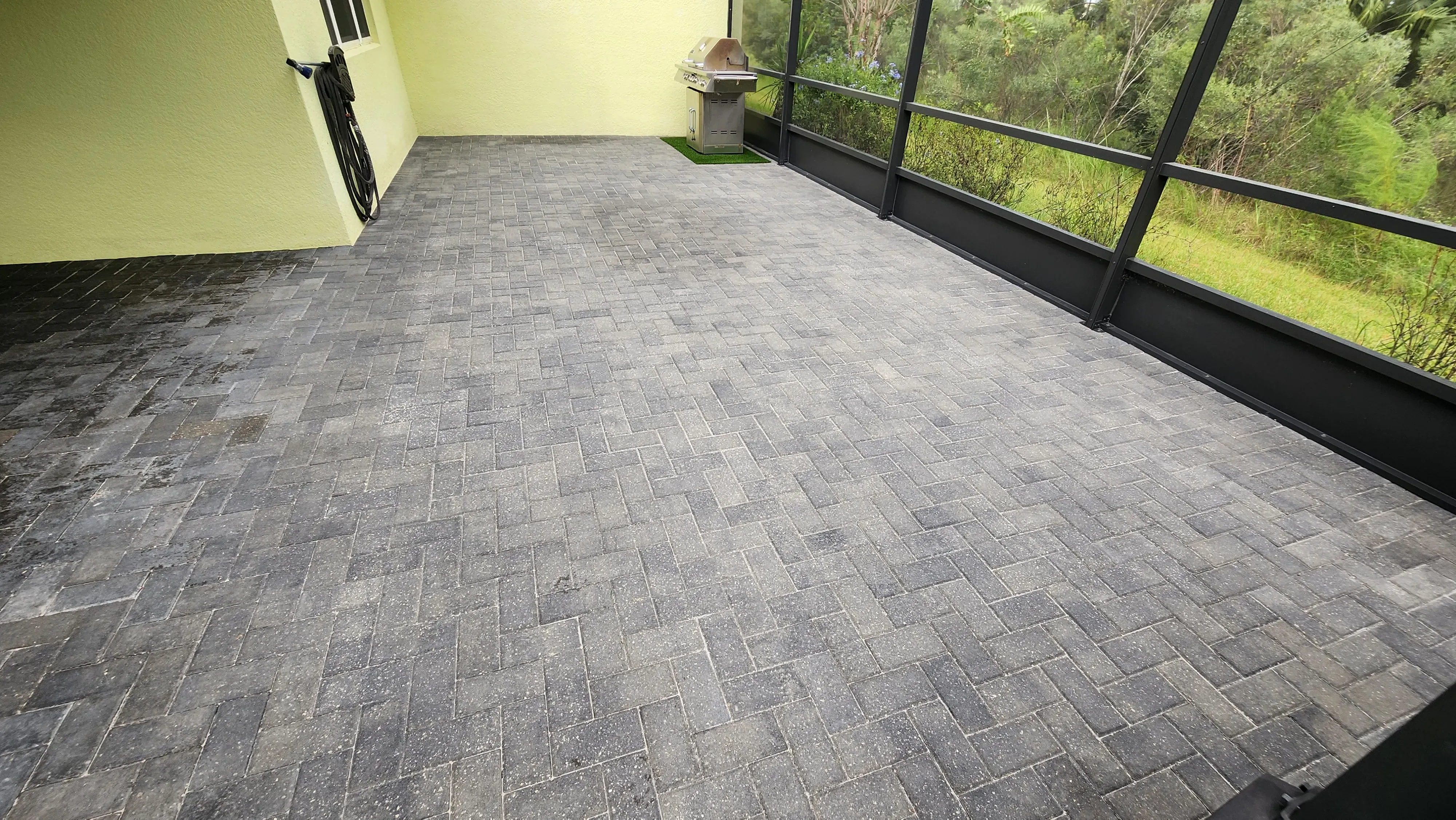
BEFORE
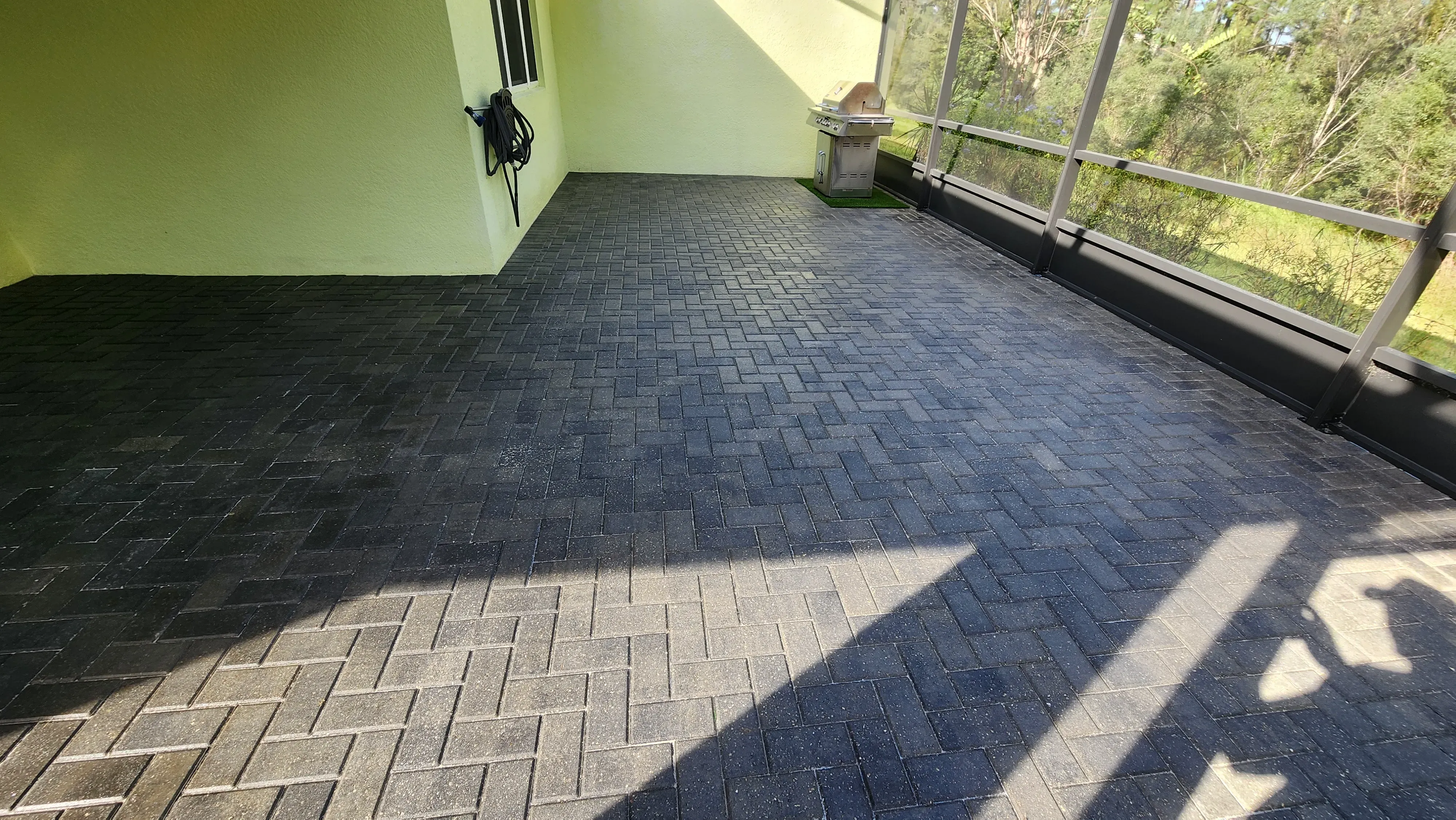
AFTER
Before and after a full Castle Shield paver restoration in Central Florida. Left: algae staining, washed-out joints, and faded color. Right: cleaned, stabilized, and sealed with a water-based sealer.
Best Time to Seal Pavers in Central Florida
Florida's wet season runs roughly from June through September. During those months, afternoon storms are common and humidity stays high all day. That does not mean you cannot seal pavers during summer, but it does mean scheduling and product choice matter more.
The easiest window for paver sealing in Central Florida is the dry season, from about October through May. February through April is the sweet spot. Temperatures are mild, humidity is lower, and you have longer windows of dry weather between rain events.
If you are planning a paver restore project and want the most predictable outcome, aim for the dry season. If you need work done during summer, a contractor who uses a quality water-based product and monitors the forecast can still get good results. See our full guide on the best time to seal pavers in Central Florida.
Patio Paver Repair: What Can Be Fixed?
Not every problem on a paver surface requires full replacement. Many common issues can be addressed as part of a restore project:
Sunken or raised pavers: Individual pavers that have shifted can often be pulled up, the base material adjusted, and the pavers reset. This is worth doing before sealing so the sealer does not lock in an uneven surface.
Cracked pavers: Single cracked pavers can usually be replaced individually. If cracking is widespread, it may point to a base failure that needs more extensive repair.
Staining: Most organic staining, rust, and mineral deposits respond well to the right cleaning treatment. Severe staining that has been locked under old sealer may require stripping first.
Efflorescence: White chalky deposits on the surface are efflorescence — mineral salts left behind as moisture evaporates. Efflorescence should be cleaned off and the source of excess moisture investigated before sealing. Do not seal over active efflorescence.
Old or failed sealer: Peeling, cloudy, or blistered sealer needs to be stripped. Sealing over it will not fix the problem.
What a Professional Paver Restore Costs in Central Florida
Professional paver restoration in Central Florida typically ranges from $1.50 to $3.00 per square foot for a standard clean-and-seal. Many residential projects land between $1,000 and $3,000 depending on the size, surface condition, and amount of prep required.
Projects that require stripping failed sealer, repairing pavers, or dealing with heavy biological staining will cost more than a straightforward clean-and-seal. Getting an accurate number requires a site visit and measurement.
DIY paver sealing is possible, but the most common mistakes — applying sealer over a damp or contaminated surface, using the wrong product, or applying too heavy a coat — are the same things that lead to white haze and early sealer failure. The prep work is where most DIY jobs fall short. See current paver sealing cost guidance for Central Florida.
Castle Shield 4-Step Restoration System
Castle Clean and Seal uses a four-step process on every paver restore job in the Central Florida area:
Treat mold, algae, mildew, and weeds with a biodegradable algaecide
Deep clean the surface using high-volume, low-pressure equipment
Stabilize paver joints with joint-stabilizing sand
Seal with two to three coats of premium water-based sealer made for Florida conditions
This process has been applied to more than 1,135 projects across Volusia, Seminole, and Orange Counties. The emphasis on preparation — especially treating biological growth and replacing joint sand before sealing — is what separates a restoration that lasts from one that fails within a season.
If you have a driveway, patio, pool deck, or walkway in the Deltona, Orlando, Sanford, Port Orange, or surrounding area and want an honest assessment of what it would take to restore it, call (386) 215-5461 or request a free estimate online.
How do I know if my pavers need to be restored or just cleaned?
What is the best paver sealer for Florida conditions?
How long does paver sealer take to dry in Central Florida?
Can paver sealing stop weeds from growing in the joints?
Why does my paver sealer look white or cloudy after it was applied?
READY TO PROTECT YOUR INVESTMENT?
GET YOUR FREE SAME-DAY
QUOTE
Join 1,135+ happy Central Florida homeowners. Licensed & insured.
Takes 30 seconds · Same-day response · No obligation