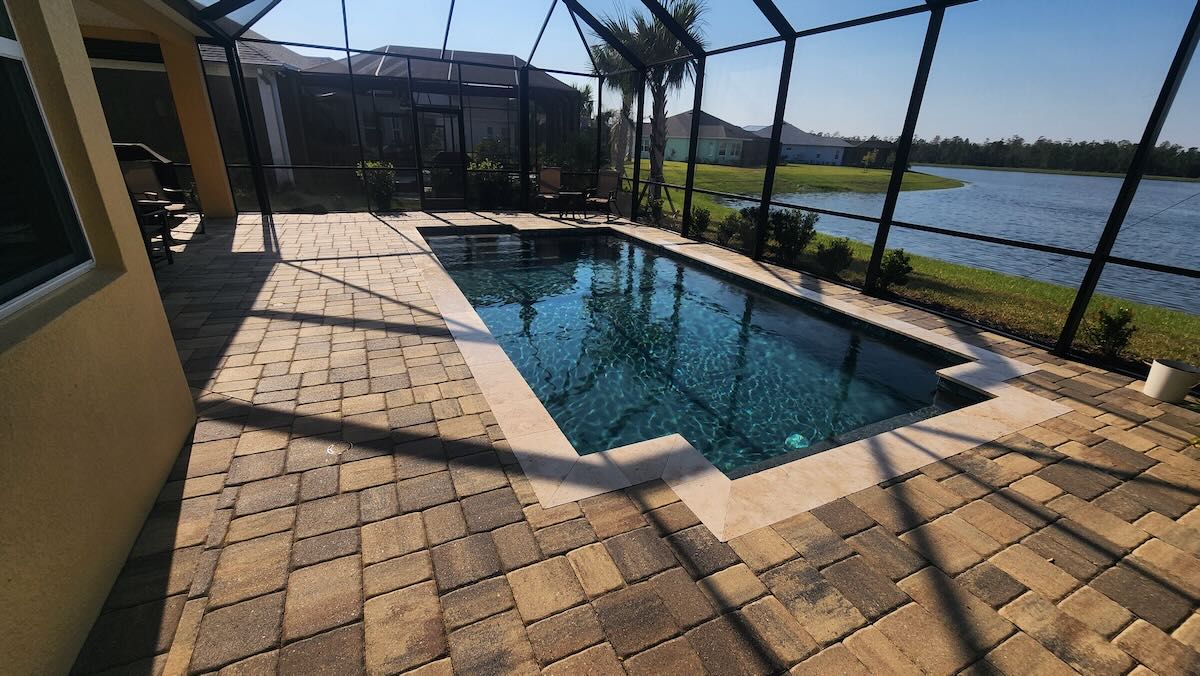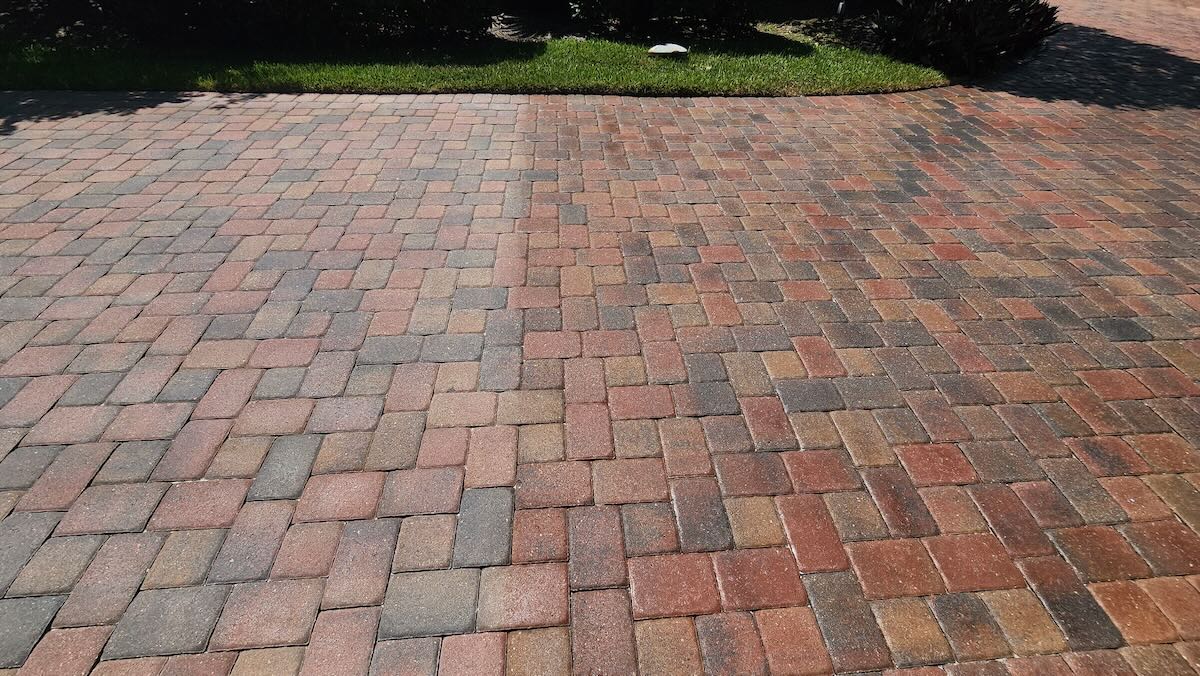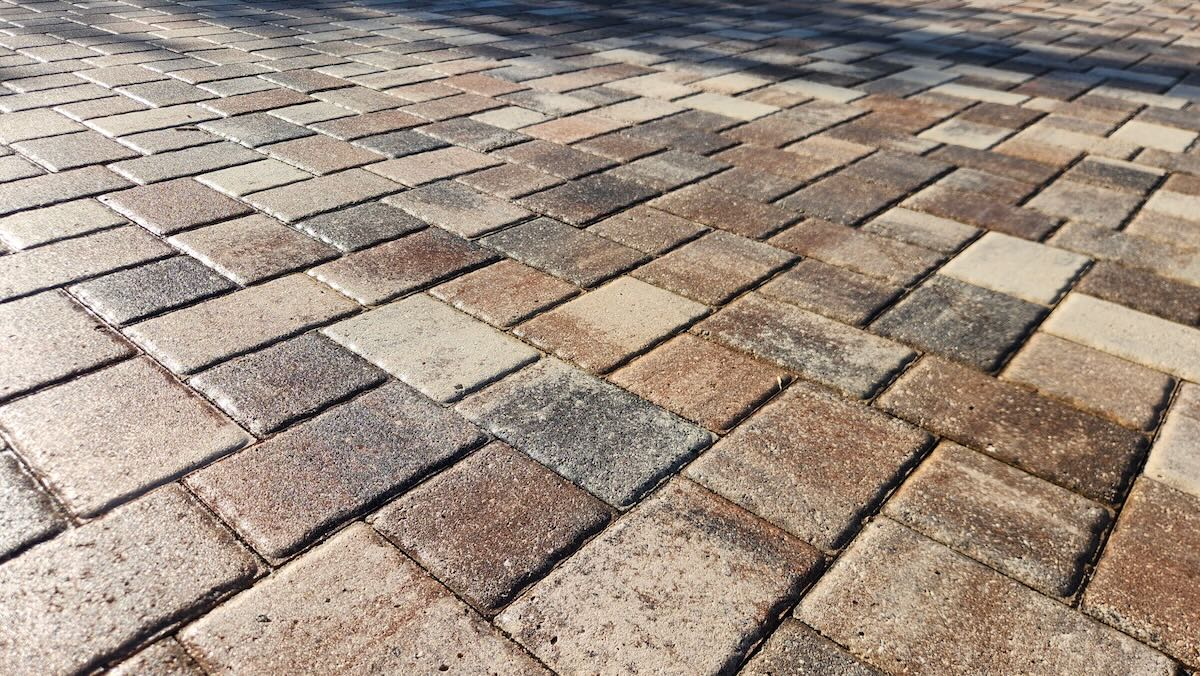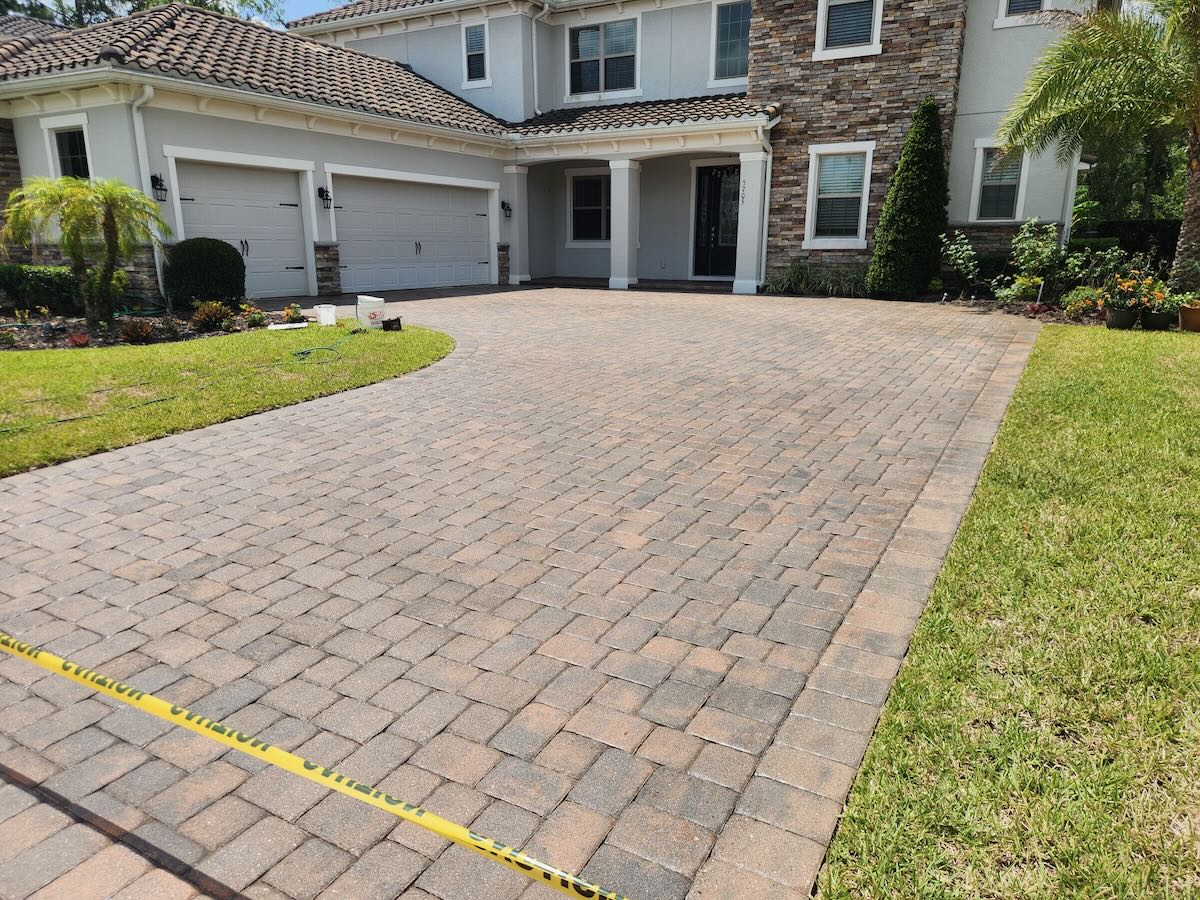


Sealed pool deck surfaces should keep a natural look while helping protect against Florida sun, water, and stains.
Key Takeaway
Travertine pool decks in Florida need a penetrating, breathable sealer — not a film-forming coating. Proper prep, including cleaning and joint stabilization, determines how long the results last. Most homeowners in Central Florida should plan to reseal every 2 to 3 years.
Why Travertine Pool Decks in Florida Need Extra Attention
Travertine is one of the most popular pool deck materials in Central Florida for good reason. It stays cooler underfoot than concrete or standard pavers, it has a natural, upscale look, and it drains water quickly because of its porous surface. But that same porosity that makes it comfortable also makes it vulnerable.
Florida's climate puts travertine through a serious workout. UV rays from intense sun bleach and dry out the surface. Summer rain and daily irrigation push moisture through the stone. Pool chemicals, sunscreen, and body oils soak into the open pores. Without protection, travertine will stain, discolor, pit, and eventually crack.
If you've been searching for travertine sealing near me in the Orlando, Daytona Beach, or Deltona area, you're already asking the right question. Sealing travertine is not optional if you want it to last.
What Kind of Sealer Does Travertine Actually Need?
This is where a lot of homeowners get into trouble. Travertine is a natural stone with tiny holes and channels running through it. It needs a penetrating travertine sealer — sometimes called an impregnating sealer — that soaks into the stone and protects it from within rather than sitting on top of the surface.
A film-forming or topical sealer applied over travertine will trap moisture inside the stone. In Florida's humid climate, that trapped moisture has nowhere to go. The result is white haze, peeling, or a bubbled, milky coating that looks worse than no sealer at all. If you've read about paver sealer turning white in Florida, the same principle applies here.
A quality penetrating travertine sealer does several things:
Repels water and pool chemicals without sealing off the stone's ability to breathe
Reduces staining from tanning oil, algae, and organic material
Helps the surface resist the salt and mineral deposits common around pools
Does not change the natural look of the stone or leave a glossy film
The sealer Castle Clean and Seal uses for travertine is a premium water-based penetrating formula designed for Florida conditions. It allows moisture vapor to escape rather than trapping it — which is exactly what travertine needs in a humid climate.
For a deeper look at sealer types and why water-based formulas perform better here, see our guide on water-based vs. solvent-based paver sealers in Florida.
How Long Does Travertine Sealer Take to Dry in Florida?
One of the most common questions we get, especially from homeowners who've had pavers sealed before, is about dry time. If you're wondering about driveway seal how long to dry, the answer for travertine is similar but depends on a few factors.
General guidance for travertine sealer cure time in Central Florida:
Light foot traffic: 4 to 6 hours after application in dry conditions
Normal pool deck use: 24 hours is a safe standard
Full cure: 48 to 72 hours, especially in humid conditions or during the rainy season
Do not allow the surface to get rained on heavily during the first 24 hours. A short afternoon shower after the sealer has had 6 or more hours to set is usually not a problem, but a prolonged soaking before the sealer has cured can cause problems.
This is one reason we generally recommend scheduling travertine sealing during Florida's dry season, roughly October through May. February through April is the ideal window because humidity is lower, temperatures are moderate, and afternoon storms are far less likely. That said, Castle Clean and Seal works year-round and plans around the forecast.
The Problem with DIY Travertine Sealing
Box-store travertine sealers exist, and some homeowners try to apply them on their own. The application itself is not complicated, but the prep work almost always is. Here's what most DIY applications skip:
1. Cleaning the surface thoroughly first
Travertine that has algae, mold, mineral deposits, or trapped dirt sealed over it will look worse after sealing, not better. The sealer locks in whatever is on the surface. At Castle Clean and Seal, we start with a biodegradable algaecide treatment to kill mold and algae at the source before we ever touch a pressure washer.
2. Managing the open holes and joints
Travertine has natural voids and holes in the surface that accumulate debris. The joints between travertine tiles also need attention. If sand or filler has eroded from the joints, weed seeds and water get in easily. We address joint stabilization as part of the process before sealing.
3. Making sure the stone is fully dry
Applying sealer over travertine that still has moisture in it — even moisture you can't see — is a common cause of white haze and failed sealer. Professional crews know how to assess surface conditions and will wait or reschedule when conditions aren't right.
If your travertine already has staining, discoloration, or damaged areas, you may need travertine floor restoration near me rather than just a standard seal. Restoration typically involves deeper cleaning, acid washing or honing to remove stains, filling chips and voids, and then sealing. Castle Clean and Seal handles the full restoration process.

BEFORE

AFTER
Before and after: Castle Clean and Seal's 4-step process restores travertine pool decks to a clean, protected finish without a heavy gloss coating.
What to Expect from a Professional Travertine Sealing Service
At Castle Clean and Seal, we follow the same structured process for travertine that we use for all paver surfaces. The Castle Shield 4-Step System is built around preparation first, sealing second. Skipping the prep is the most common reason sealer fails early.
Step 1 — Treat mold, algae, and weeds at the source
We apply a biodegradable algaecide to the entire surface before cleaning. This kills the biological growth from the root rather than just washing off the visible layer on top.
Step 2 — Deep clean with high-volume, low-pressure washing
We use a high-volume, low-pressure system specifically so we don't damage the travertine surface or blow out joint material. Travertine is softer than concrete and does not respond well to high-pressure blasting.
Step 3 — Stabilize the joints
For travertine pool decks with eroded or missing joint material, we apply joint-stabilizing sand before sealing. This prevents weeds from establishing and stops water from undercutting the stone.
Step 4 — Apply 2 to 3 coats of penetrating water-based sealer
We apply a premium water-based penetrating sealer appropriate for Florida's climate and for natural stone surfaces. Multiple coats ensure proper coverage into the pores without over-applying and risking surface buildup.
How Often Should You Reseal Travertine in Florida?
For travertine pool decks in Central Florida, a realistic resealing interval is every 2 to 3 years under normal conditions. A few factors push that timeline shorter:
Heavy pool use and frequent splash-out
Overhead irrigation that regularly wets the surface
Direct western or southern sun exposure all day
Trees overhead dropping tannins and debris
Pets using the deck regularly
The easiest test is the water bead test. Pour a small amount of water on the travertine. If it beads up and sits on the surface, the sealer is still working. If it soaks in immediately and darkens the stone, the sealer has worn down and it's time to reseal.
For questions about what professional sealing typically costs in this area, see our breakdown of paver sealing costs in Central Florida. Travertine sealing generally falls in the same per-square-foot range as other paver surfaces, though restoration work or large voids that need filling will add to the total.
Paver Patio Repairs Before Sealing
Not every travertine pool deck is ready to seal as-is. Paver patio repairs may be needed first, including:
Filling large natural voids or chips in the travertine face
Re-leveling sunken or raised pieces
Replacing cracked tiles
Addressing drainage issues causing standing water
Sealing over a surface with structural problems does not fix those problems. It can actually make them harder to address later because you'll need to strip or re-prep the sealer before doing the repair work. Our team assesses the full condition of the surface during the initial walkthrough and flags repairs before the project begins.
Serving Central Florida Travertine Pool Decks
Castle Clean and Seal is based in Deltona and serves homeowners across Volusia, Seminole, and Orange Counties. Our travertine sealing work covers pool decks, patios, walkways, and outdoor living areas throughout:
Volusia County: Daytona Beach, Port Orange, Ormond Beach, New Smyrna Beach, DeLand, Edgewater, DeBary, Holly Hill, Orange City
Seminole County: Sanford, Lake Mary, Oviedo, Winter Springs, Altamonte Springs, Longwood, Casselberry
Orange County: Orlando, Winter Park, Apopka, Maitland, Winter Garden, Windermere, Dr. Phillips
With 1,135+ projects completed, 250+ five-star reviews, and 15+ years of experience, we've seen the full range of what Central Florida weather does to travertine. We're licensed and insured, and every project gets the same preparation-first approach regardless of size.
If your travertine pool deck needs cleaning, sealing, or a full restoration, call us at (386) 215-5461 or request a free estimate online. We'll take a look, walk you through what the surface actually needs, and give you a clear quote — no pressure.
Want to know the best time of year to get this done? See our article on the best time to seal pavers in Central Florida for timing guidance that applies to travertine as well.
What type of sealer should be used on travertine pool decks in Florida?
How long does travertine sealer take to dry after application?
How often should travertine pool decks be resealed in Central Florida?
Can I seal travertine myself or should I hire a professional?
Does travertine around a pool need repairs before sealing?
READY TO PROTECT YOUR INVESTMENT?
GET YOUR FREE SAME-DAY
QUOTE
Join 1,135+ happy Central Florida homeowners. Licensed & insured.
Takes 30 seconds · Same-day response · No obligation